January 1821
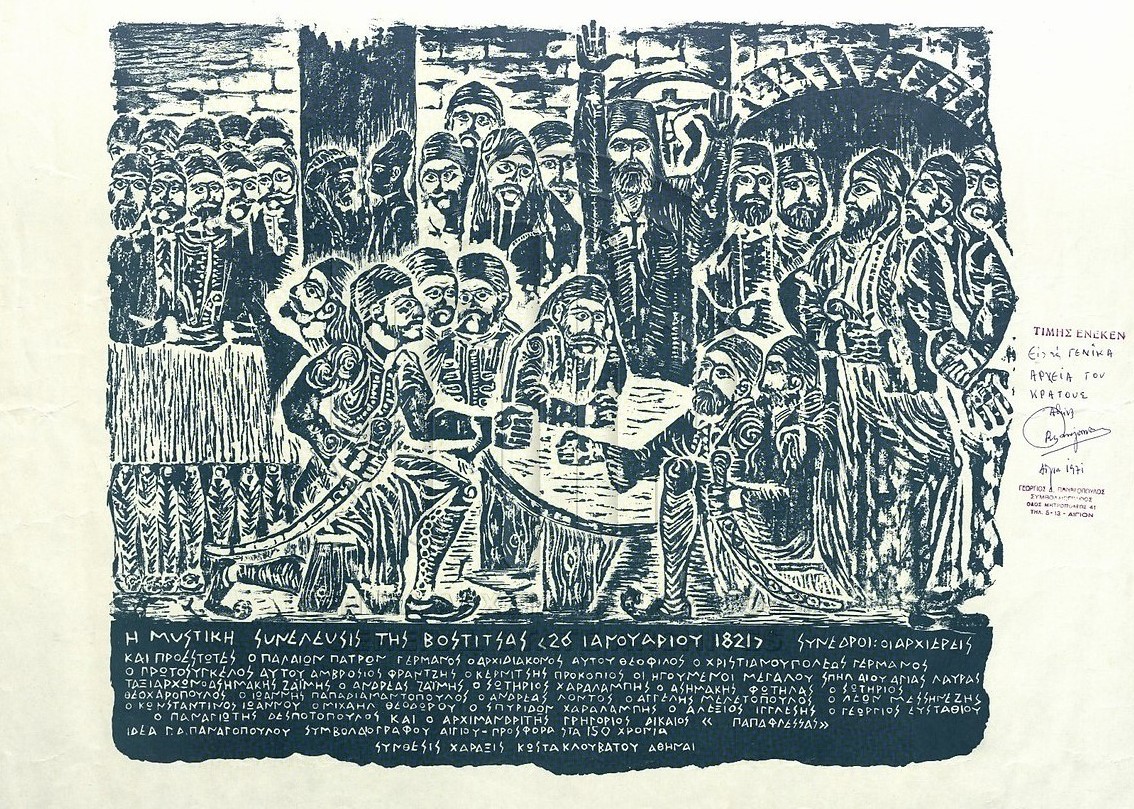
The Vostitsa Conference (Aigio)
At the Conference of Vostitsa, held in late January 1821 at the mansion of Andreas Londos, members of the Filiki Etaireia, local notables, and clergy from the Peloponnese took part, among them Grigorios Dikaios, known as Papaflessas, who presented the revolutionary plan. Despite the reservations expressed and the disagreements regarding the readiness and timing of the uprising, the foundations were laid for the outbreak of the Revolution
February 1821
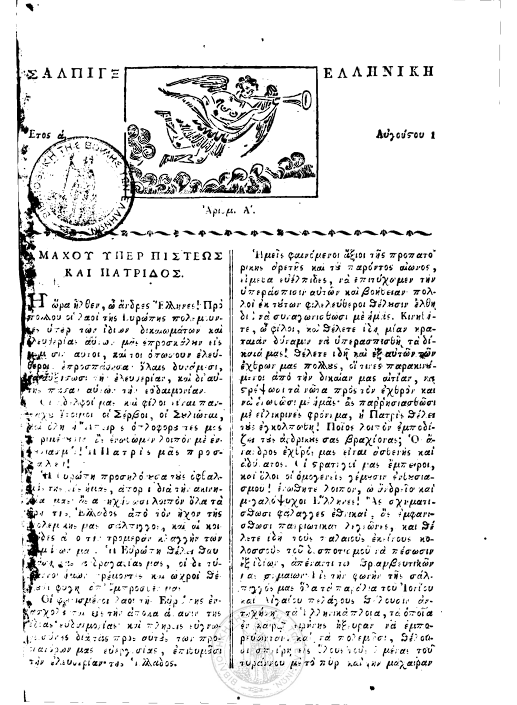
Outbreak of the Revolution in the Danubian Principalities
On 22 February 1821, Alexandros Ypsilantis crossed the Pruth River, a tributary of the Danube that served as a natural border between the Russian and Ottoman Empires, and advanced toward Iași in Moldavia. The circulation of the revolutionary proclamation titled “Fight for Faith and Fatherland” marked the official beginning of the Revolution in the Danubian Principalities. In March of the same year, Greek students and pupils of the Greek school of Odessa formed the Sacred Band, led by Nikolaos Ypsilantis with Athanasios Tsakalov as adjutant. Tsar Alexander I repudiated Ypsilantis, distancing Russia from the uprising. On 7 June 1821, the Sacred Band, under Ypsilantis’ command, was defeated at Dragatsani by the superior Ottoman forces
March 1821
Outbreak of the Revolution in the Peloponnese
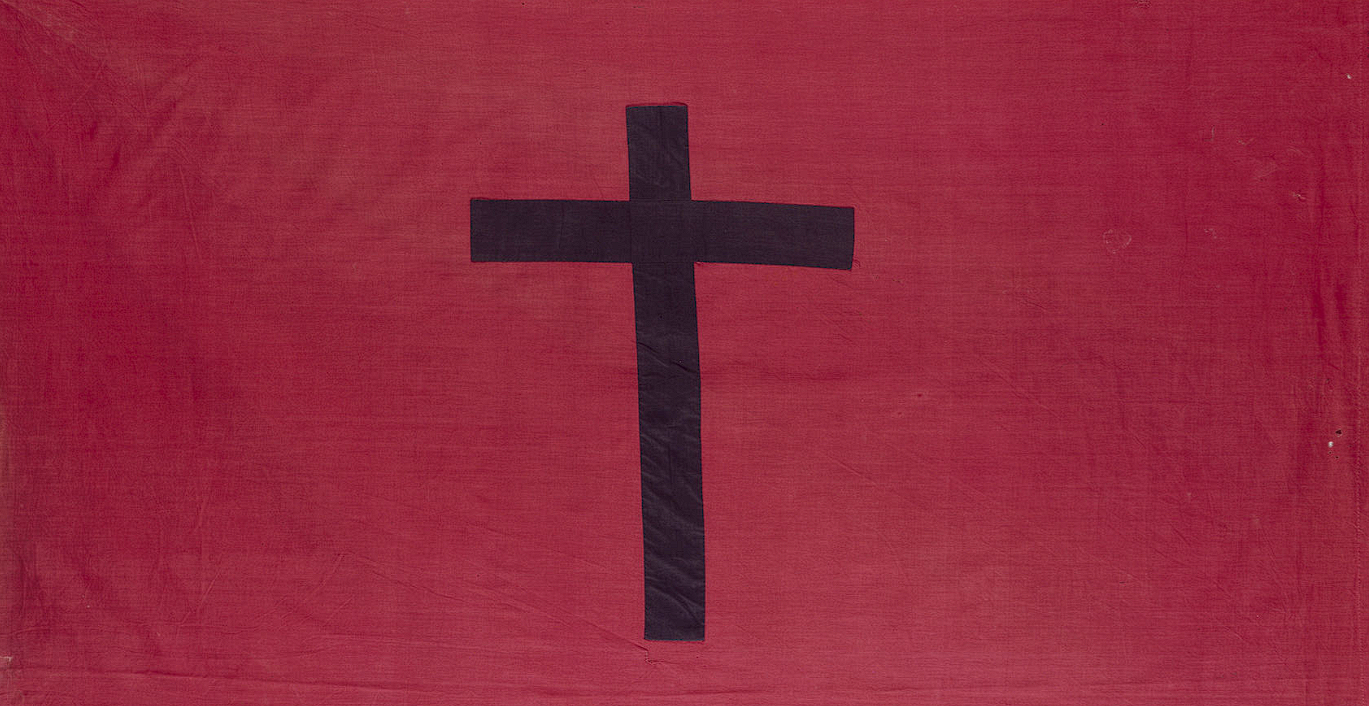
Στις 17 Μαρτίου 1821 η Μάνη υπό τον Πετρόμπεη Μαυρομιχάλη κήρυξε τον πόλεμο εναντίον της Οθωμανικής Αυτοκρατορίας. Στις 23 Μαρτίου, ο Θεόδωρος Κολοκοτρώνης, ο Παπαφλέσσας και ο Πετρόμπεης Μαυρομιχάλης απελευθερώνουν την Καλαμάτα. Στην Πάτρα, ο Παλαιών Πατρών Γερμανός ορκίζει τους επαναστάτες στην Πλατεία Αγίου Γεωργίου και ο Ανδρέας Λόντος αίρει την επαναστατική κόκκινη σημαία με τον μαύρο σταυρό. Σε αντίποινα, η Υψηλή Πύλη προβαίνει σε αποκεφαλισμό ομογενών της Κωνσταντινούπολης.
March 23rd 1821
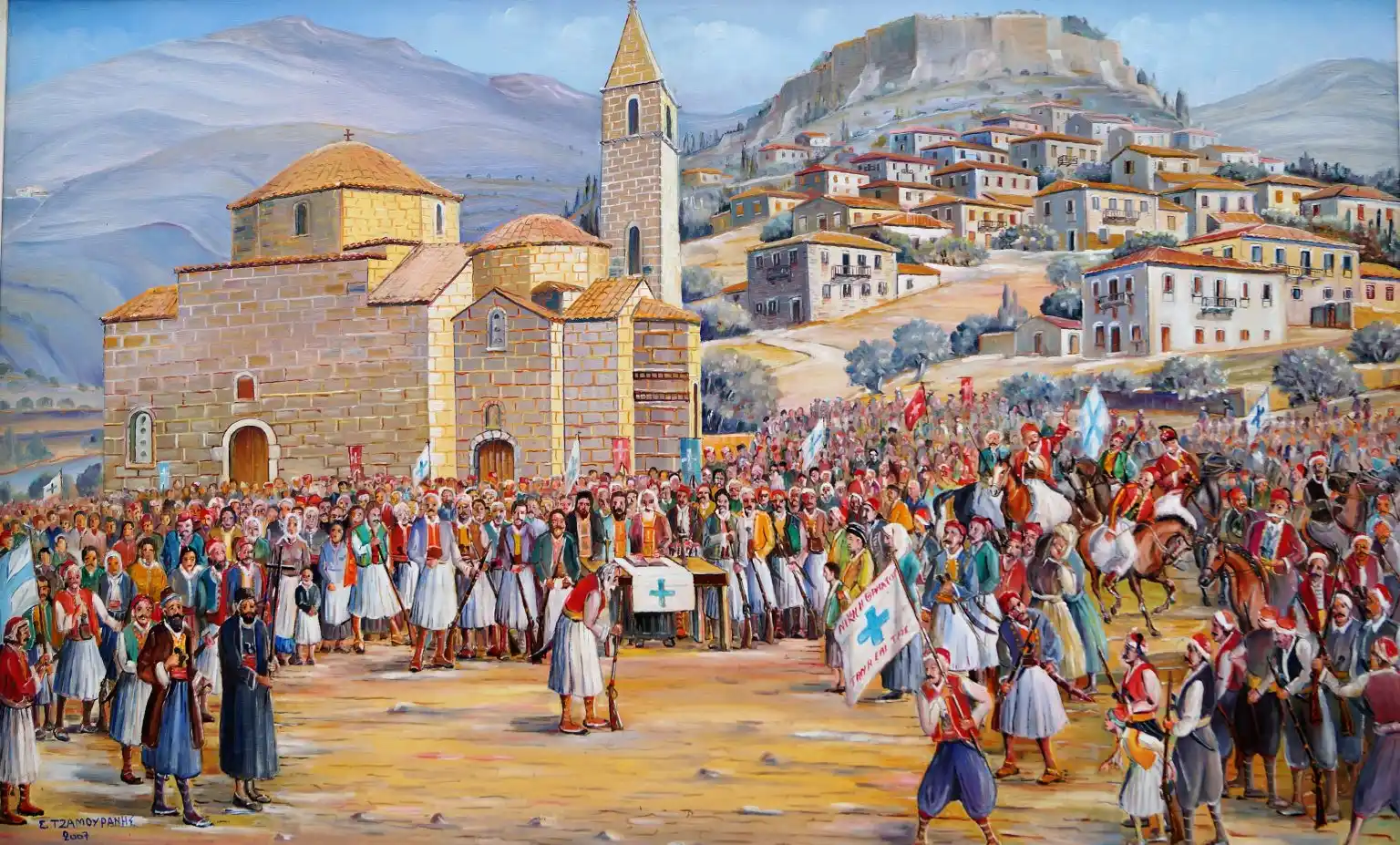
The Liberation of Kalamata
The Liberation of Kalamata on 23 March 1821 was one of the decisive early actions that shaped the course of the Greek Revolution. Greek armed bands, led by Petrobey Mavromichalis, Theodoros Kolokotronis, Papaflessas, Anagnostaras, and other fighters, encircled the city and compelled the Ottoman voevoda (governor), Suleiman Agha Arnaoutoglou, to surrender without resistance. Kalamata passed into Greek hands and became the first liberated center of the uprising. Soon after, the Messenian Senate was established, assuming responsibility for coordinating the struggle in the Peloponnese, along with its renowned proclamation, the “Warning to the European Courts,” issued by its President, Petrobey Mavromichalis. The banners of the fighters from Falaisia were also raised during the capture of Kalamata.
March 26th 1821
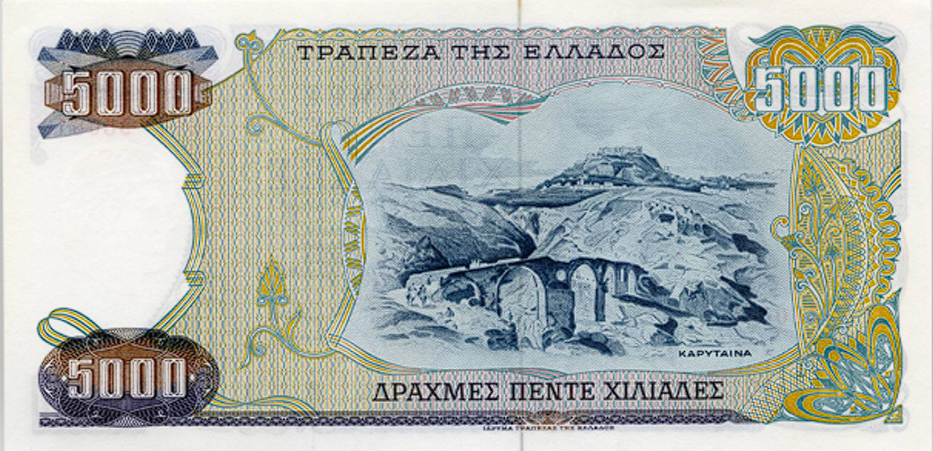
Murder of an Ottoman Courier at the Bridge of Karýtaina
At the end of March 1821, a critical incident occurred at the bridge of Karýtaina. A Turkish courier, carrying an important letter regarding the reinforcement of the garrison of Tripolitsa, was killed by Greek fighters. The letter, sent by the Phanariot Ottomans of Olympia to the Ottomans of Karýtaina, informed them that they would be passing through on their way to Tripoli for safety and urged them to join them. The message never reached its destination, allowing the revolutionaries to prepare strategically.
March 27th 1821
Victorious battle at the bridge of Karytaina
The Battle of Karytaina, also known as the battle at the Pass of Agios Athanasios, was the first regular engagement of the Revolution in the Peloponnese. The Greeks, under Theodoros Kolokotronis, supported by captains such as Ilias Mavromichalis, Pieros Voidis Mavromichalis, Tzanetos Christopoulos, the Koliopoulos brothers (Plapoutas), Kanelos Deligiannis, Mitropetropavas, and hundreds of fighters from the regions of Andritsaina, Gortynia, Messinia, and Mani, managed to repel the Ottoman forces attempting to cross the bridge of Karytaina over the Alpheios River. The battle ended in a Greek victory and held particular significance, as it boosted morale and halted Ottoman mobilization in the area. It served as a prelude to the subsequent successes in the Peloponnese.
April 1821
Capture of Leontari by Konstantina Zacharia
The outbreak of the Revolution took the Ottomans of the Peloponnese by surprise, prompting many to abandon their villages and seek refuge in Tripolitsa. Konstantina Zacharia, the determined daughter of the armatolos Zacharias Barbitsiotes, took an active role in pursuing the fleeing Ottomans, reaching as far as Mystras, where they had fortified themselves in the castle for safety. From there, following a route along the valley of the Eurotas River, she advanced toward Leontari, one of the most important administrative centers of Arcadia and the seat of the Ottoman voevoda (provincial military governor). With resolve and force, she attacked the settlement, captured Leontari, tore down the symbols of Ottoman authority — destroying the crescent emblems on the mosques — and set fire to the residence of the Ottoman official, whom she fatally shot. The liberation of Leontari was a significant military blow to the Ottoman Empire and an act that awakened and strengthened the morale of the fighters of the Peloponnese.
April 1821
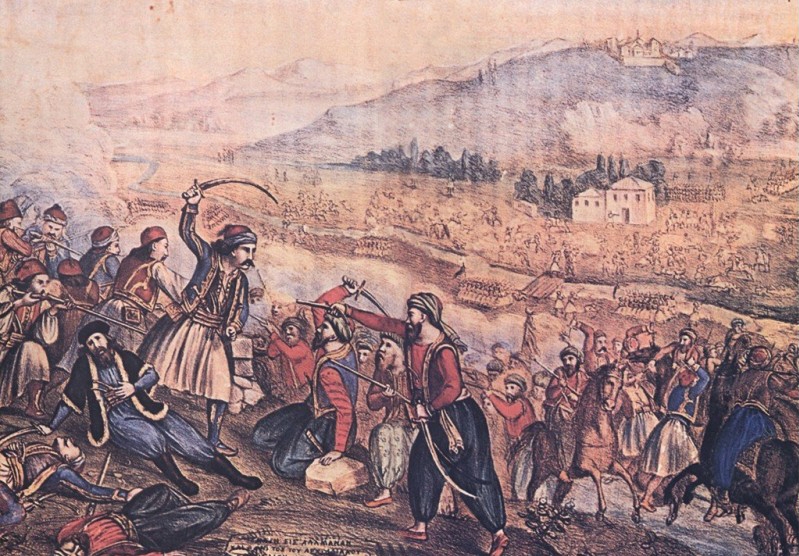
Battle of Alamana
On 23 April, Athanasios Diakos, Dimitrios Xiross (Panourgias), and Giannis Dyovouniotis, together with 1,500 armatoloi, took part in one of the most significant battles of the Greek Revolution, at the bridge of Alamana. Hursit Pasha had dispatched Omer Vryonis and Kiose Mehmet Pasha with a force of 9,000 men to suppress the uprising that had broken out in the Peloponnese. Although the Greeks were unable to halt the advance of the numerically superior Ottoman army, they succeeded in delaying its march toward the Peloponnese. The martyrdom of Athanasios Diakos elevated him to a symbol of heroism, and his sacrifice inspired the fighters, strengthening the revolutionary spirit.
April 1st 1821
Turkish reinforcements toward Karytaina
In early April 1821, while Greek fighters were besieging the Ottomans in the castle of Karytaina, a strong Ottoman cavalry force departed from Tripolitsa to reinforce the besieged garrison. The cavalry advanced toward the village of Salesi, where it caused extensive destruction and set fires in an effort to encourage the trapped Ottoman troops. Despite the appeals of captains such as Kolokotronis and Anagnostaras for an immediate response, the Greek camp suffered from a lack of unified leadership. The outcome was disastrous: the Ottoman cavalry launched a sudden and forceful attack, causing panic and the collapse of the Greek positions. The breakdown of the camp revealed the revolutionaries’ difficulties in coordination and highlighted the importance of discipline and military organization. This episode proved to be a painful lesson in the early days of the uprising, but also a starting point for future reorganization
April 3rd 1821
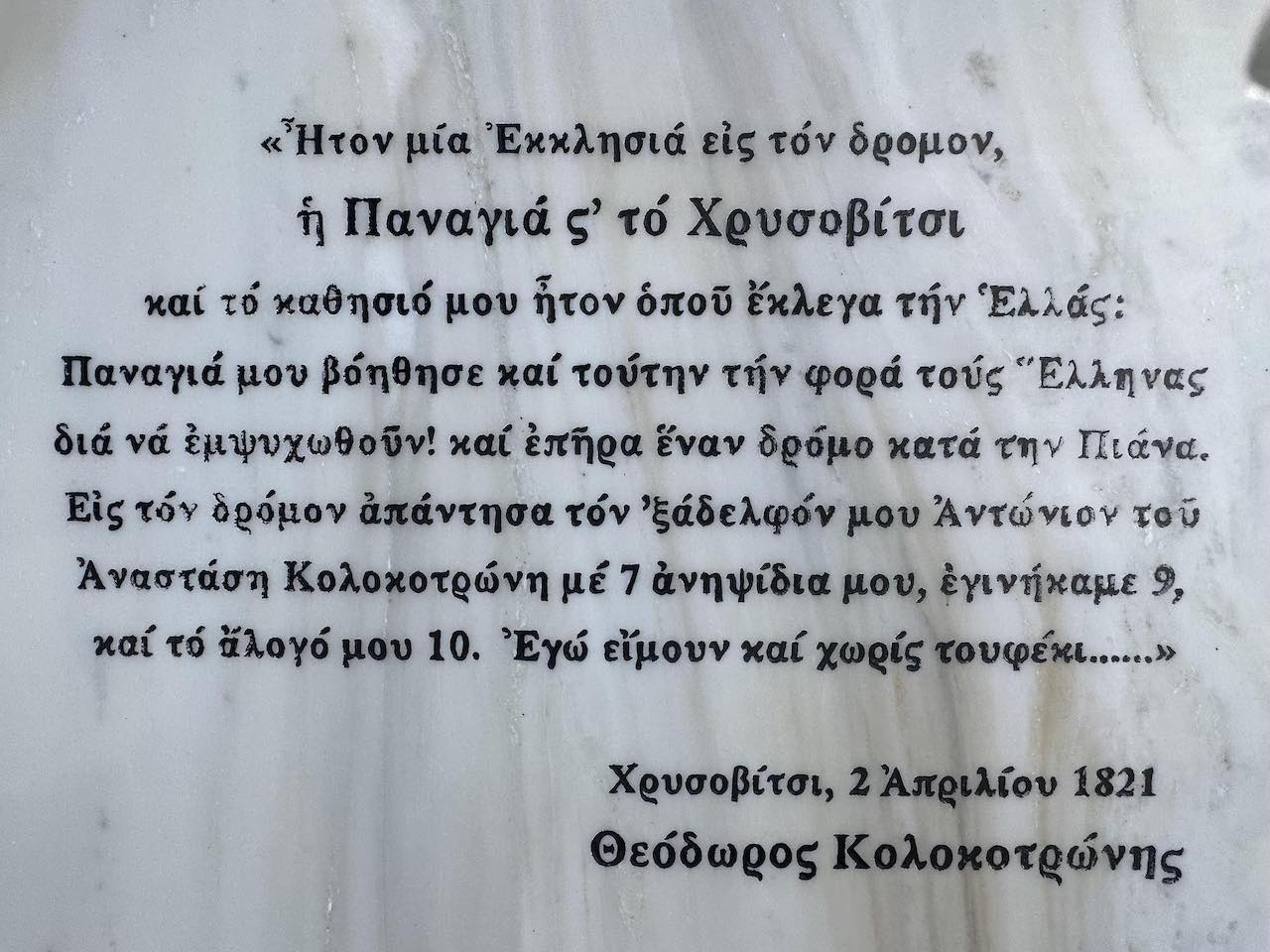
War council at Chrysovitsi
The war council at Chrysovitsi took place on 3 April 1821 and served as a key moment of coordination among the Greek fighters in Mantineia before the siege of Tripolitsa. After the defeat at Karytaina, Theodoros Kolokotronis presented his plan for the siege of Tripoli to the captains. Their reaction was dismissive; several of them withdrew and moved toward Leontari, where they established a recruitment center and their base of operations.
May 1821
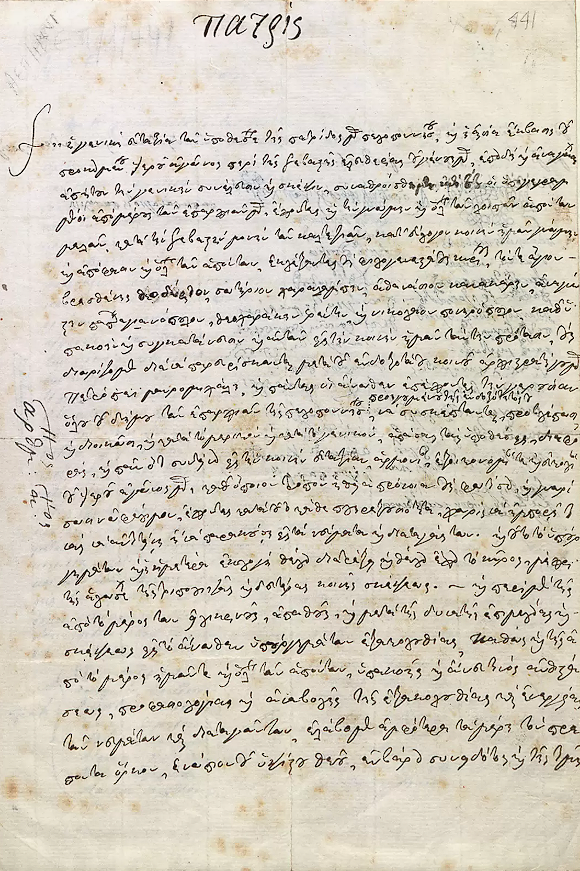
Establishment of the Peloponnesian Senate
On 26 May 1821, through the Act of the Assembly of Kaltezai, the Peloponnesian Senate was established with the aim of ensuring “the general orderliness of the affairs of our homeland, the Peloponnese, and the successful outcome of the present sacred struggle for the revered freedom of our Nation […]”. The Assembly of Kaltezai, convened at the initiative of the Messenian Senate in Mantineia, was presided over by Petrobey Mavromichalis, with Rigas Palamidis serving as secretary. In May 1821, the Revolution expanded across many regions. Anthimos Gazis proclaimed the uprising on Mount Pelion, rousing the population of Magnesia. In Macedonia, Emmanouil Pappas raised the banner of the Revolution in Polygyros of Chalkidiki and in the Karyes of Mount Athos, mobilizing monks and local inhabitants. In Eressos on Lesvos, Dimitrios Papanikolis set fire to an Ottoman brig, marking one of the earliest successful naval acts of the struggle
12 - 13 May 1821
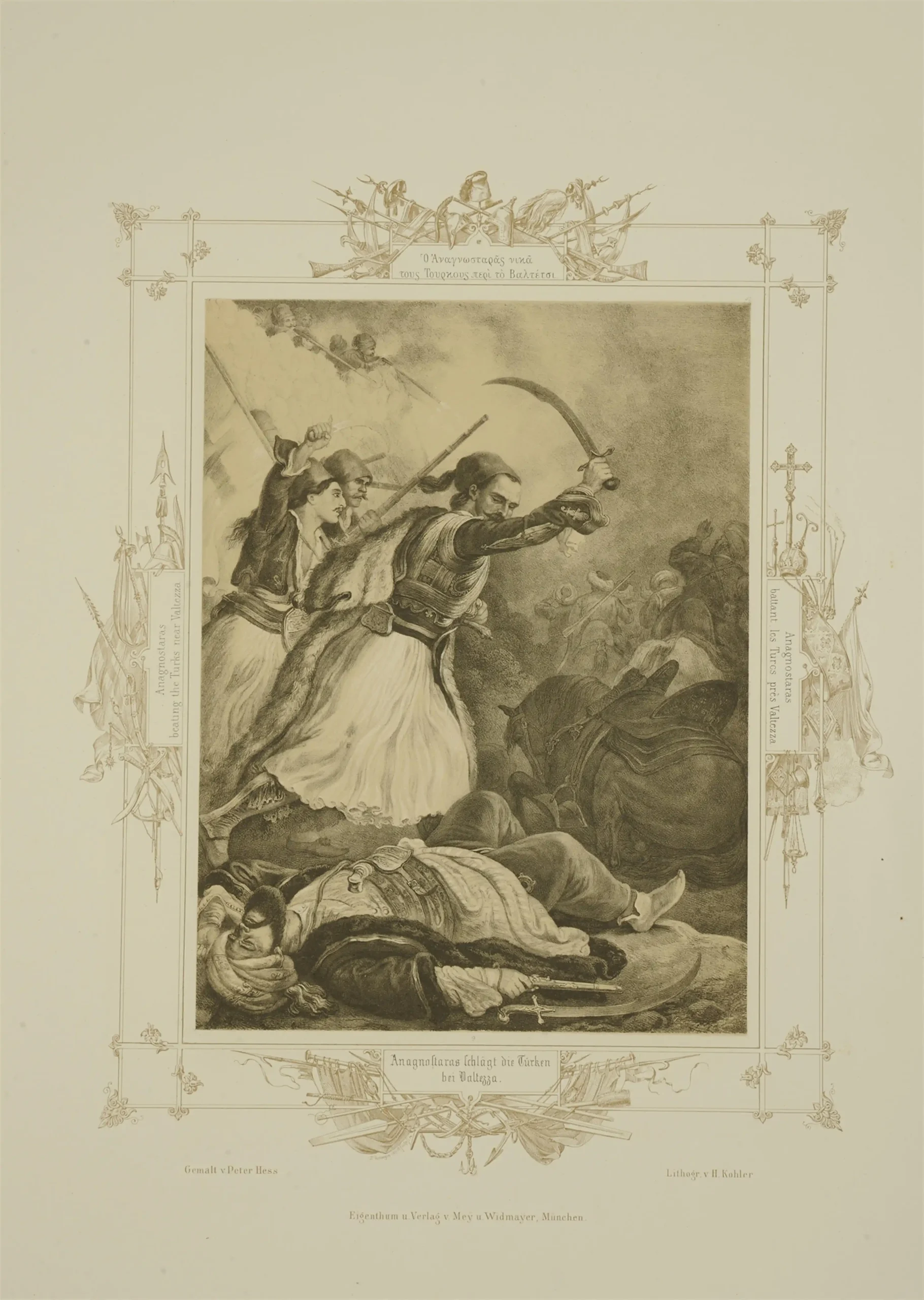
Battle of Valtesi
After the first battle of Levidi in April, Theodoros Kolokotronis established three camps — Valtesi, Piana, and Chrysovitsi — as a strategic measure to isolate and besiege Tripolitsa. In his memoirs he characteristically wrote: “I slept in Valtesi, had lunch in Piana, and dined in Chrysovitsi.” This strategic arrangement allowed for coordinated Greek movements and created a tightening ring of pressure around Tripolitsa. The Battle of Valtesi took place on 12–13 May 1821 and stands as one of the most significant early victories of the Greeks during the Revolution. A little over 2,000 fighters, led by Kolokotronis, Konstantinos Mavromichalis, Anagnostaras, and other captains, fortified themselves in the village of Valtesi with limited weaponry and repelled intense Ottoman assaults. Panagiotis Katrivanos from the village of Isari was positioned in the second defensive enclosure and distinguished himself for his bravery during the battle.
May 18th 1821
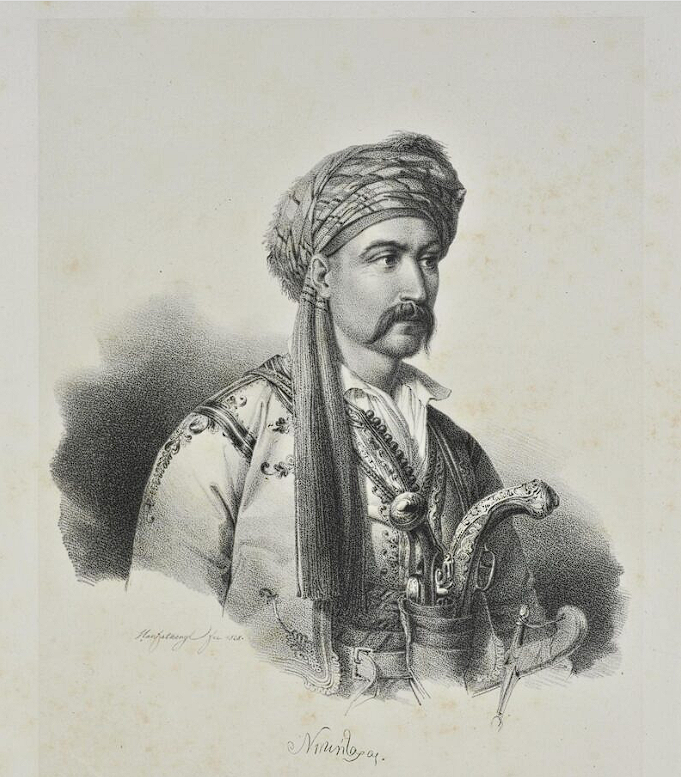
Battle of Doliana
The Battle of Doliana took place on 18 May 1821 in Ano Doliana, Arcadia, and stands as one of the first major Greek victories during the Revolution of 1821. The Greek forces were led by Nikitas Stamatelopoulos from the village of Tourkoleka, who, together with his men, confronted thousands of Ottomans with remarkable tactical ingenuity. Fortified inside the village houses, they inflicted heavy losses on the enemy and forced them into disorderly retreat. The battle highlighted the determination and bravery of the Greek fighters and earned Nikitaras the renowned epithet “Tourkofagos.” The victory at Doliana strengthened the morale of the revolutionaries and became a decisive event for the continuation of the struggle in Arcadia and the wider Peloponnese.
June 1821
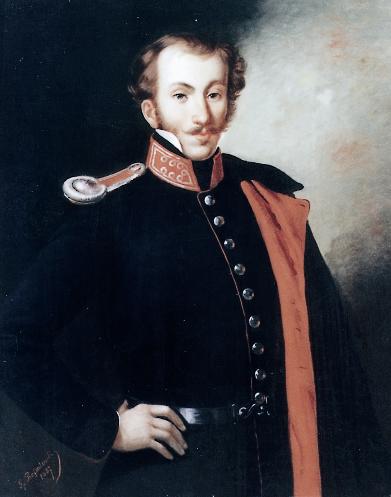
Dimitrios Ypsilantis in the Peloponnese
In June 1821, significant developments took place that shaped the course of the Greek Revolution. Dimitrios Ypsilantis arrived in the Peloponnese as the representative of the Supreme Authority of the Filiki Etaireia, intending to assume the political and military leadership of the Struggle and to secure unity among the local forces. On 7 June, the Sacred Band suffered a heavy defeat at Dragatsani, in one of the most important battles of the revolutionary movement in the Danubian Principalities—an event that marked the beginning of the end for Alexandros Ypsilantis’ front. On 14 June, the Revolution broke out in Crete, and a few days later, on 25 June, Ioannis Kolettis and Giannakis Rangos proclaimed the uprising in Syrrako and Kalarrytes in Epirus, extending the Struggle into northwestern Greece.
September 1821
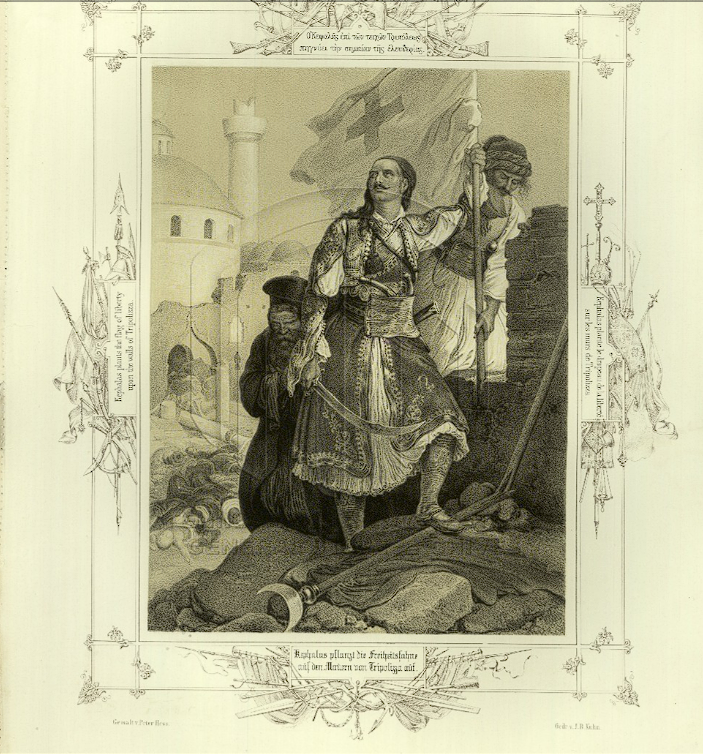
Fall of Tripolitsa
After a months‑long siege, the Revolutionaries, following a plan devised by Theodoros Kolokotronis and under the leadership of Petrobey Mavromichalis, captured Tripolitsa on 23 September 1821. Tripolitsa was a strategic and economic center of the Peloponnese as well as the seat of Ottoman administration. It was home to half of the Turkish population of the Peloponnese, protected by a significant number of armed units. The Fall of Tripolitsa marked a decisive turning point for the consolidation and further development of the Revolution.
November 1821
Establishment of the Senate and the Areios Pagos
In November 1821, two important local assemblies were convened to provide administrative organization to the regions in revolt. At the Assembly of Western Continental Greece, held in Messolonghi under the presidency of Alexandros Mavrokordatos, the Organismos of Western Continental Greece was adopted, providing for the establishment of the Senate, a body with both administrative and judicial authority. At the same time in Amfissa, the Assembly of Eastern Continental Greece, presided over by Theodoros Negris, proceeded with the election of the twelve members of the Areios Pagos, likewise a mixed administrative and judicial institution. The creation of these two bodies constituted a significant step toward the political organization of the Revolution and the formation of institutional structures. Their existence, however, proved temporary, as they were abolished by the Fifth Resolution of the Second National Assembly at Astros
December 1821
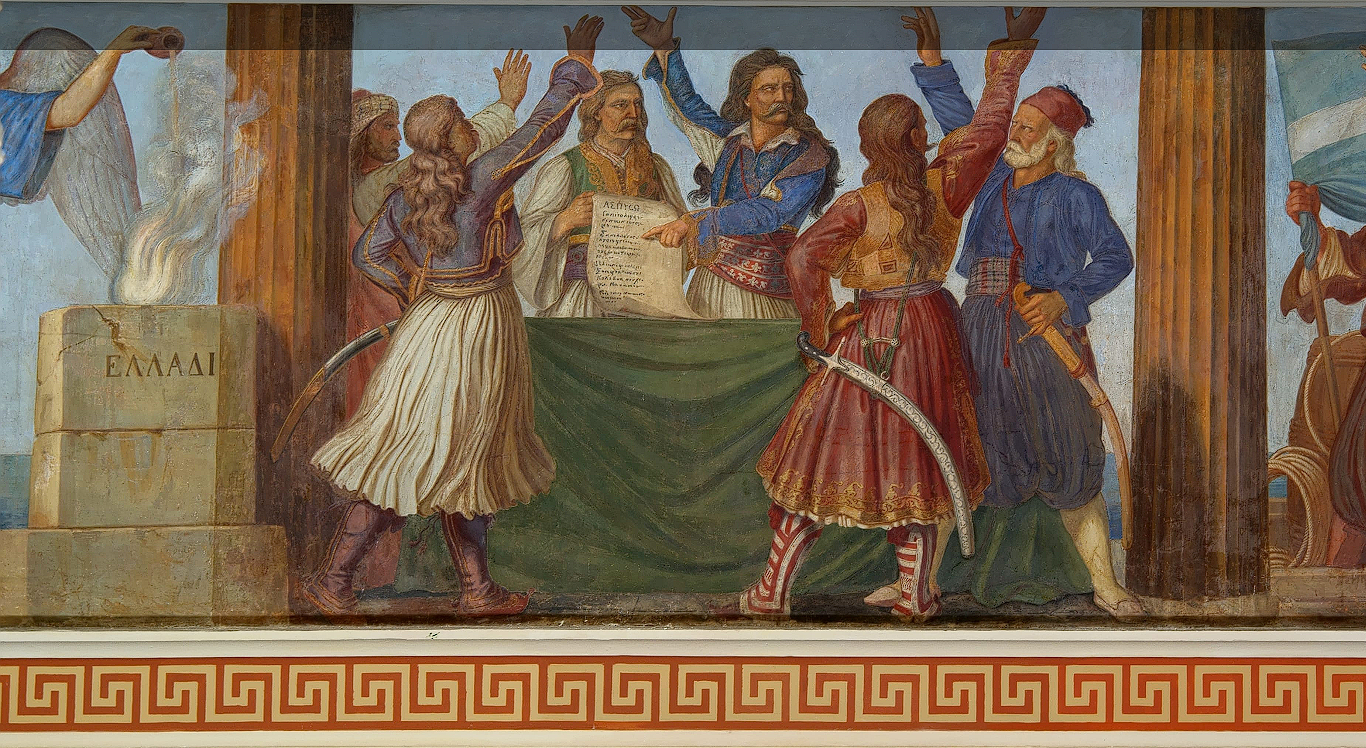
First National Assembly of Epidaurus – Provisional Constitution of Greece
The First National Assembly convened at Piada in Epidaurus (Nea Epidaurus) on 20 December 1821 and concluded in January 1822. It was the first nationwide political gathering of the Greeks in revolt, aiming to establish a unified administration and an institutional framework for the Struggle. Its most significant achievement was the adoption of the first Constitution, known as the Provisional Constitution of Greece, which proclaimed the independence of the Greek nation and established the separation of powers into legislative, executive, and judicial branches. The Assembly instituted two principal political bodies: the Legislative, which exercised legislative authority, and the Executive, which functioned as the government. The First National Assembly marked the initial step toward the creation of a unified Greek state and the replacement of local administrations with a central authority, thereby strengthening the political cohesion of the Revolution.
April 1822
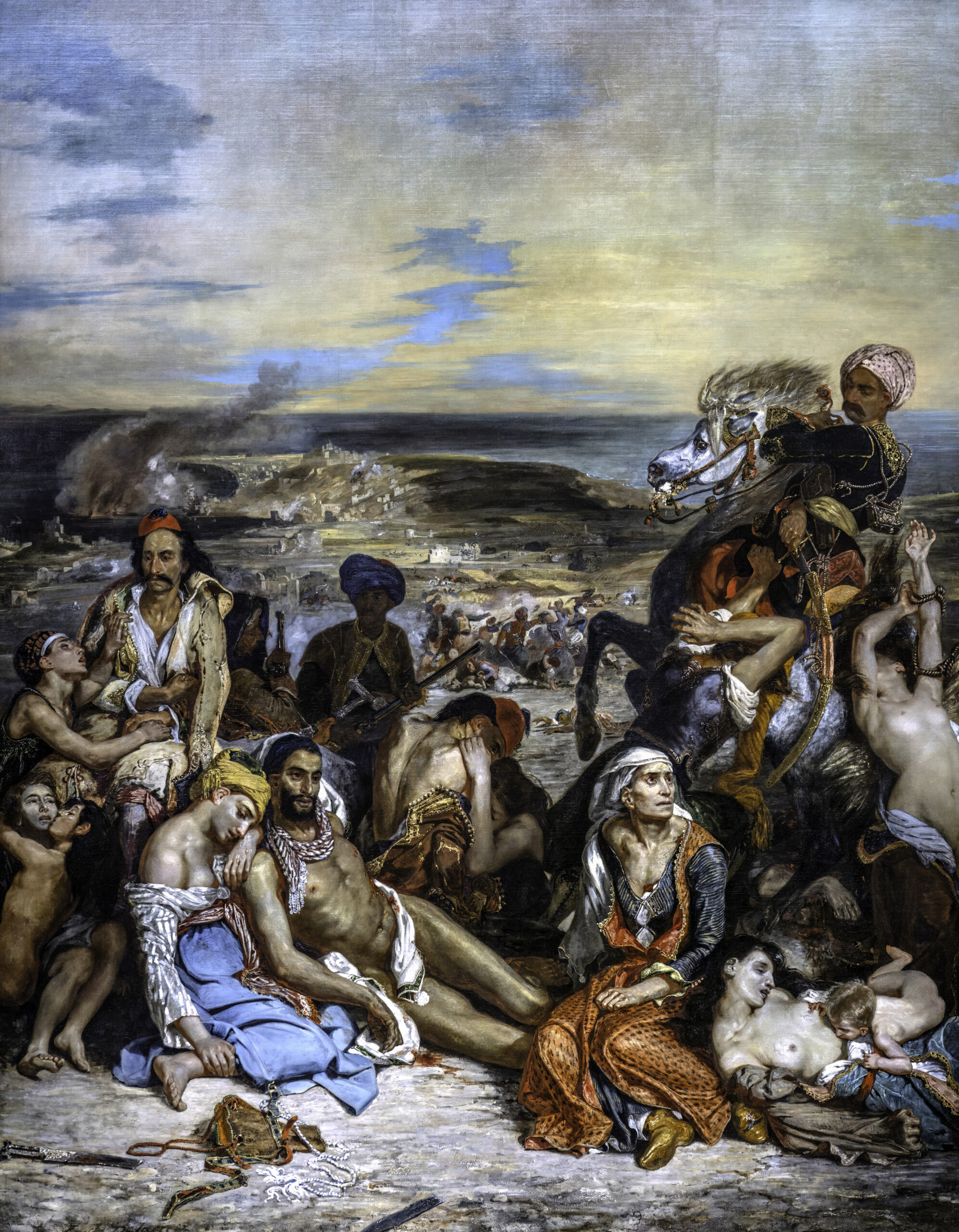
Destruction of Chios
The Destruction of Chios was one of the most tragic moments of the Greek Revolution. Lykourgos Logothetis from Samos and Antonios Bournias from Chios rallied the rural population and proclaimed the Revolution on the island. In April 1822, the Ottomans, under Kapudan Pasha Kara Ali, invaded Chios and killed or captured a large part of the Greek population. Approximately 42,000 inhabitants perished, while many others were sold into slavery. The catastrophe stirred international emotion and strengthened support for the Greek cause. It became a symbol of Ottoman brutality and of the Greeks’ urgent need for independence
May 1822
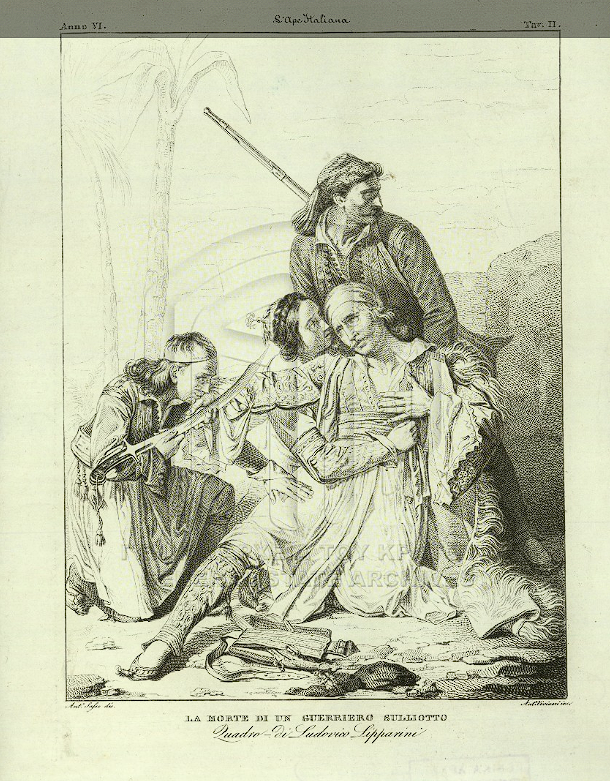
Fall of Souli
On 16 May 1822, Ottoman forces under Hurşit Pasha and Omer Vryonis captured Souli. Despite the Ottomans’ numerical superiority, the Souliote fighters defended themselves with remarkable courage for an extended period. However, the shortage of food and ammunition, combined with the failure of the campaign at Peta, placed them in a precarious position. In September 1822, they capitulated and were forced to abandon Souli, seeking refuge in the Ionian Islands. The fall of Souli left Messolonghi as the sole stronghold of the Greek Revolution in Western Greece. The sacrifice and unyielding resistance of the Souliotes became enduring symbols of the struggle for freedom and independence, while also strengthening the philhellenic movement across Europe.
June 1822
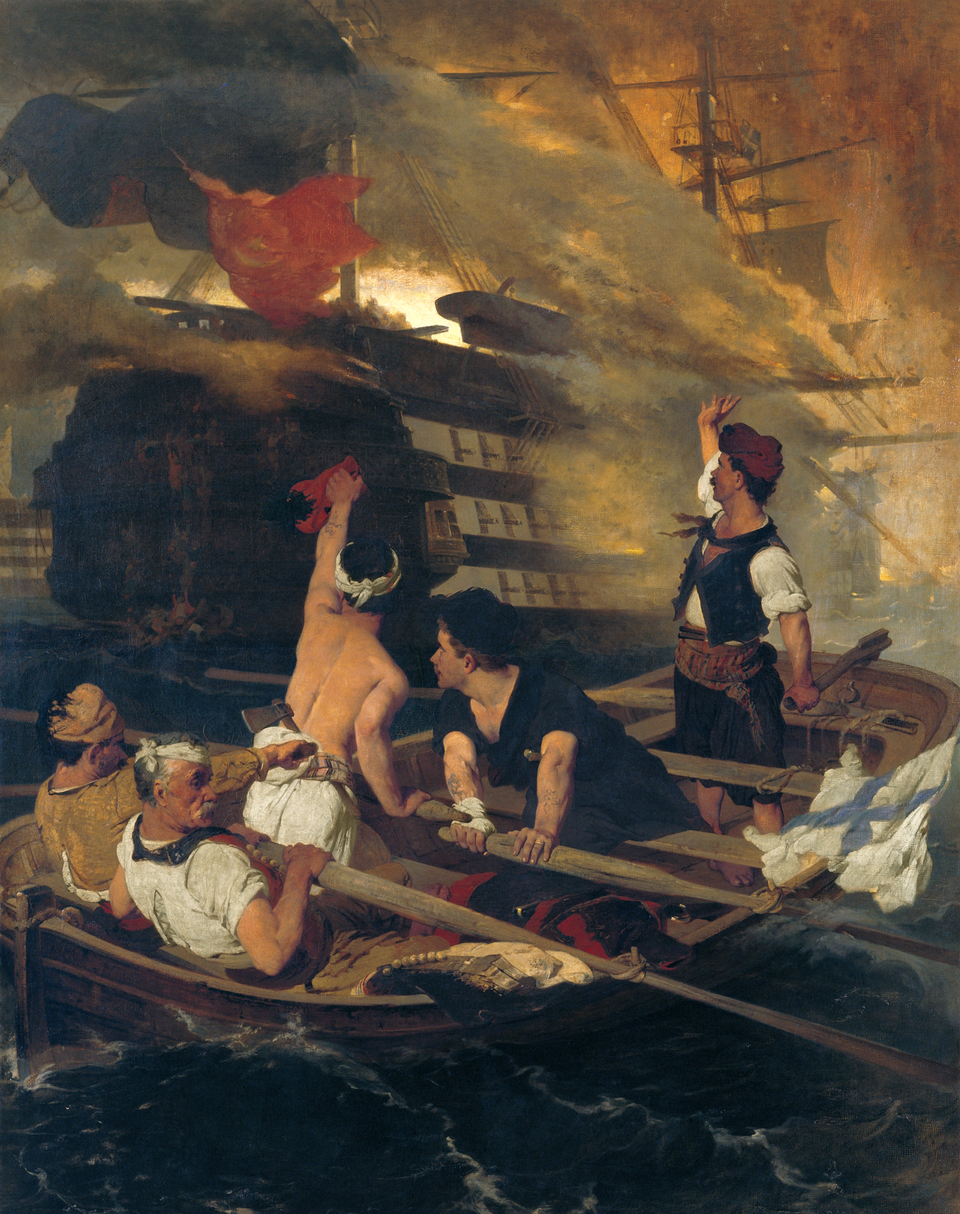
Burning of the Ottoman flagship at Chios
During the night of 6 to 7 June 1822, Konstantinos Kanaris set fire to the Ottoman flagship at Chios, resulting in the fatal wounding of Kapudan Pasha (Grand Admiral) Kara Ali. The success of the Greek sailors was one of the most significant achievements of the Greek Revolution, inspiring awe and worldwide sympathy while simultaneously dealing a severe blow to the Ottoman Empire.
July 1822
Battle of Peta
On 4 July 1822, Greek fighters and the Battalion of Philhellenes, under the leadership of Alexandros Mavrokordatos, confronted the Ottoman army, which had been reinforced with Turco‑Albanian troops. The Battle of Peta resulted in a major defeat for the Greek forces, yet it became synonymous with sacrifice and philhellenism. The loss was devastating, with tragic casualties.
July 1822
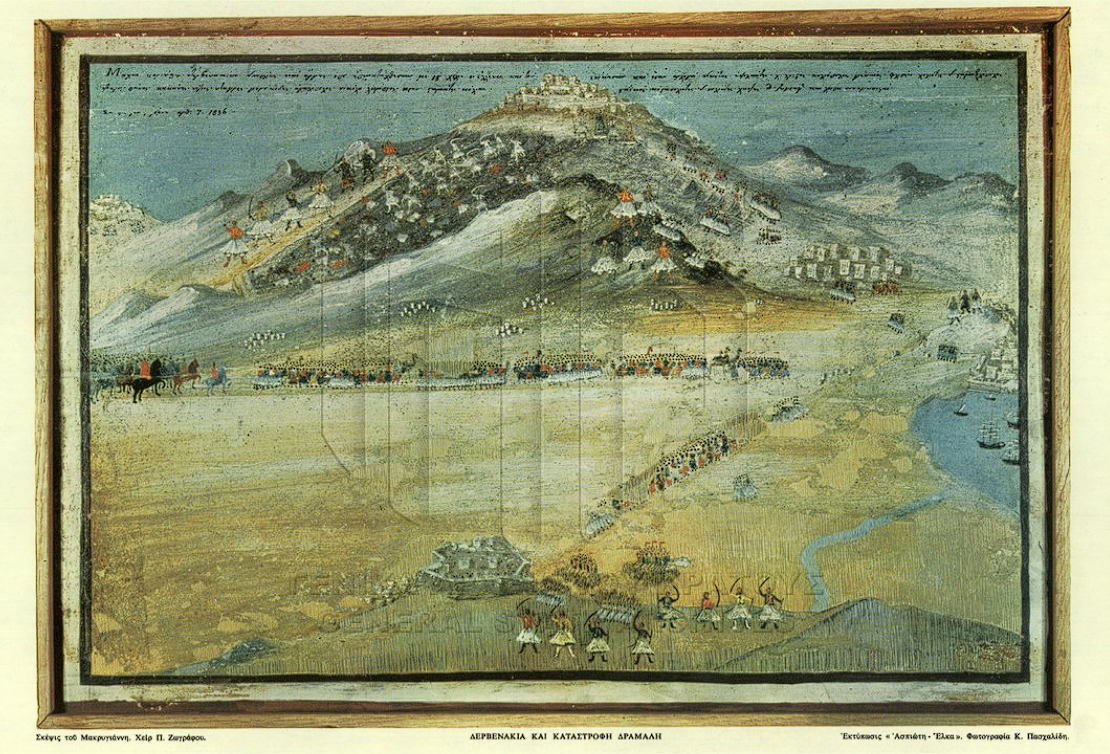
Battle of Dervenakia
On 29 June, Mahmud Pasha of Drama, known as Dramalis, encamped near Lamia at the head of strong military forces with the aim of suppressing the Revolution. Dramalis’ campaign reached its peak with the capture of Acrocorinth on 5 July 1822. On 26 July, Greek fighters under the perceptive leadership of Theodoros Kolokotronis engaged in one of the most significant battles of the Revolution at the narrow passes of Dervenakia, decisively defeating the Ottoman army and overturning Dramalis’ plans to seize the Peloponnese. By exploiting the rugged terrain, the Greeks achieved a crushing victory, which revived their morale and marked a turning point in the course of the Revolution.
September 1822
Death of Nikolaos Stamatelos Tourkolekas
Nikolas Stamatelos, also known as Tourkopelekas or Tourkolekas, was born in Tourkoleka in 1792 and was the brother of Nikitaras (Nikitas Stamatelopoulos). After the Battle of Dervenakia on 26 July 1822, he was appointed by his uncle, Theodoros Kolokotronis, as the primary commander overseeing the siege of Nafplio. He served as a Captain in the Regular Corps and distinguished himself for his military abilities. On 18 September 1822, at the age of 30, he was killed at the location Kioski outside Nafplio, fighting bravely against the Ottomans. His sacrifice is honored as an important contribution to the War of Independence.
October 1822
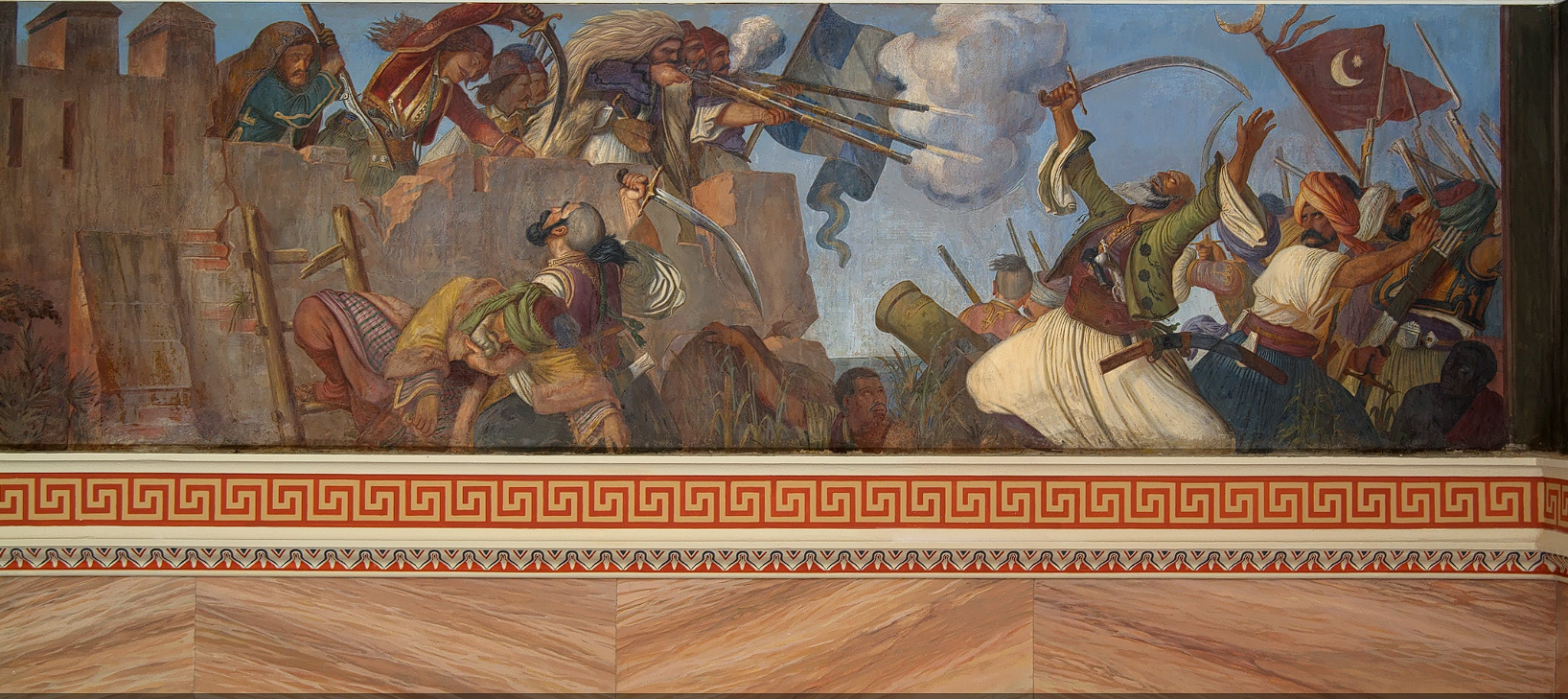
First Siege of Messolonghi
On 25 October 1822, Ottoman forces under Omer Vryonis and Kütahı Pasha attempted to capture Messolonghi, a town of strategic importance for the continuation of the struggle in Central Greece. The First Siege of Messolonghi lasted for roughly three months, during which the Greek defenders displayed steadfast resistance. The support of the Hydra and Spetses fleet, under Andreas Miaoulis, which broke through the Ottoman blockade in the lagoon of Messolonghi, together with the landing of more than 1,000 Peloponnesians carrying ammunition and provisions, boosted Greek morale and contributed decisively to the failure of the siege. A few days later, the struggle at sea achieved yet another success with Konstantinos Kanaris’ burning of the Ottoman vice-admiral’s ship off Tenedos.
1823
The vow of Kolokotronis at the Holy Monastery of the Dormition of the Virgin
Theodoros Kolokotronis fulfilled his vow in 1823 by rebuilding the Holy Monastery of the Dormition of the Virgin (also known as the Monastery of Kolokotronis or “Merze”), located a few kilometers north of Megalopolis, near Nea Ekklisoula. According to his memoirs, he visited the ruined monument and, pledging himself to the Virgin Mary, swore that he would restore it once the homeland was liberated. He wrote: “Once I went to the feast of the Holy Monastery. This monastery was large and had been destroyed in the first Turkish occupation. When I passed by, it was a broken enclosure and a church covered with tree branches. Then I vowed: My Panagia, help us free our homeland from the Tyrant, and I will rebuild you as you were before. She helped me, and in the second year of our revolution I fulfilled my vow and rebuilt it.”
January 1823
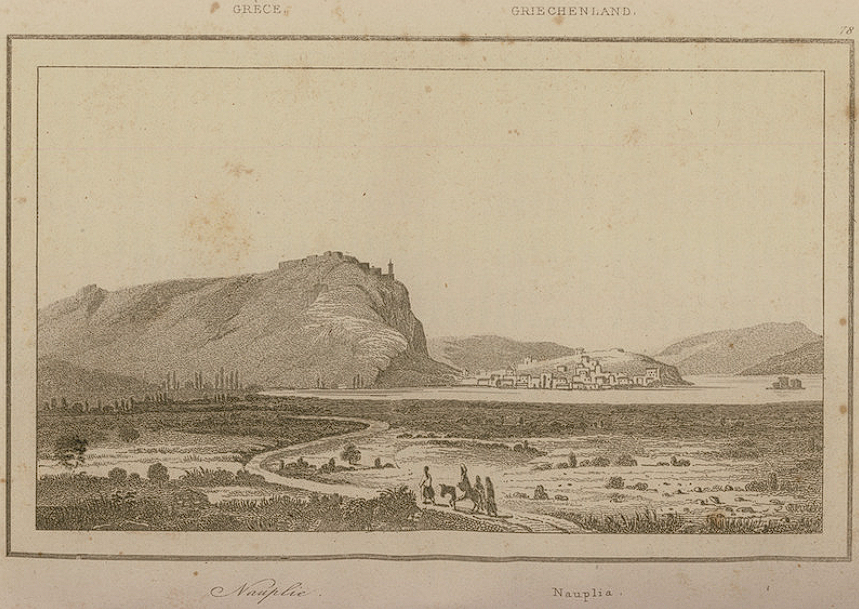
Nafplio Designated as the Seat of the Provisional Revolutionary Government
Στις 18 Ιανουαρίου 1823, το Ναύπλιο ορίζεται ως έδρα της Προσωρινής Επαναστατικής Κυβέρνησης. Πρόεδρος του Εκτελεστικού σώματος ήταν ο Αλέξανδρος Μαυροκορδάτος έως τις 25/04/1823. Στην Ευρυτανία, ο Γεώργιος Καραϊσκάκης καταφέρνει την πρώτη του σημαντική νίκη εναντίον ισχυρών οθωμανικών δυνάμεων υπό τον Ισμαήλ πασά.
March 1823
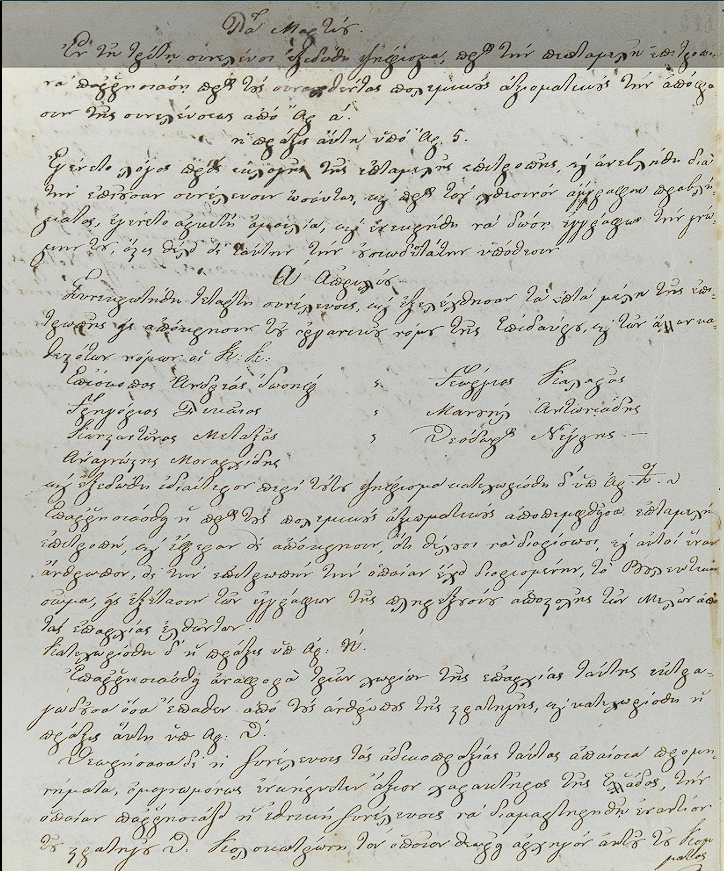
Second National Assembly of Astros
The Second National Assembly convened at Astros in Kynouria from 30 March to 18 April 1823, during a critical phase of the Greek Revolution. A total of 327 deputies participated, 288 representing the liberated regions of Greece and 39 coming from “unredeemed” territories and Greek communities abroad. The Assembly ratified the “Law of Epidaurus,” a revised constitutional text based on the first Constitution adopted by the First National Assembly. The “Law” sought to strengthen central governance and institutional stability by limiting local authorities and safeguarding the unity of the Struggle. The Second National Assembly stands as a significant milestone in the effort to establish a unified political system during the Revolution.
Fall 1823
Meeting at Silimna
In the autumn of 1823, a group of discontented captains and notables gathered in Silimna — among them Theodoros Kolokotronis and his son, Nikitas Stamatelopoulos (Nikitaras), Dimitrios Koliopoulos (Plapoutas), Theodoros Negris, Georgios Sisinis, Asimakis Fotilas, Dimitrios Ypsilantis, Odysseas Androutsos, and others — accompanied by armed bands and determined to oppose Alexandros Mavrokordatos, as they did not recognize the results of the elections for the new Legislative Body. They swore that they would not submit to the new government. This event marked the beginning of the first phase of the civil war within the Greek Revolution. Kolokotronis eventually reconciled with the Deligiannis family, and the alliance was sealed with the engagement of his son, Konstantinos (Kolinos), to the daughter of Kanellos Deligiannis.
Fall 1823
First Phase of the Greek Civil War (1823–1825)
The tensions among the revolutionaries intensified after the Second National Assembly, as key political positions were assumed by members of the political faction of the kotzabasides and the Hydriots. At the same time, Theodoros Kolokotronis was stripped of the title of “Lieutenant General,” the Peloponnesian Senate was abolished, and Dimitrios Ypsilantis was sidelined. Petrobey Mavromichalis served as President of the Executive Body, with Theodoros Kolokotronis as Vice President. In July, Alexandros Mavrokordatos was elected President of the Legislative Body, but he resigned due to Kolokotronis’ strong opposition. By the autumn of 1823, internal disputes had escalated into a full civil war between rival factions, each of which established its own government.
January 1824
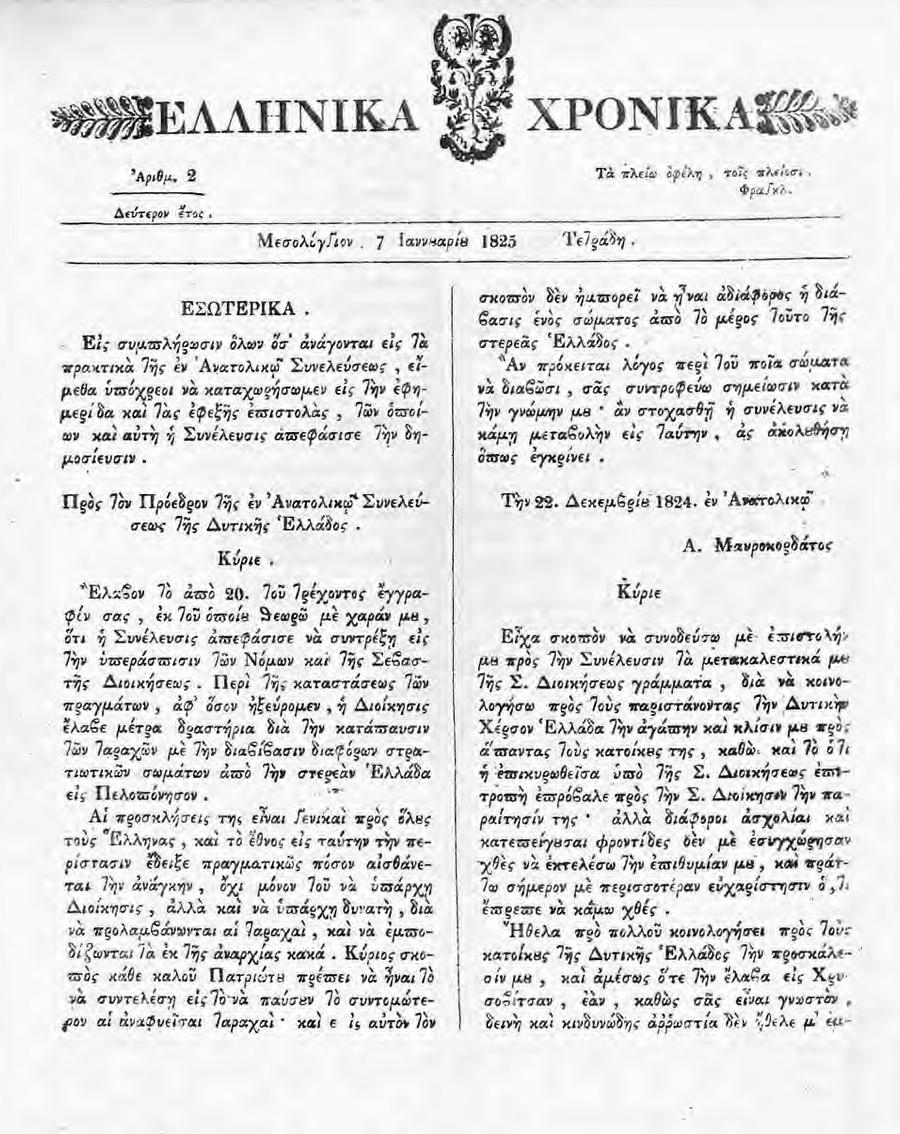
Front page of the newspaper Greek Chronicles, dated 7 January 1825
The Greek Chronicles was a political and military newspaper published in Messolongi by the Swiss philhellene Johann Jakob Meyer, using the printing press of Dimitrios Mestheneas. Its publication began on 1 January 1824 and concluded on 20 February 1826, producing a total of 226 issues (106 in 1824, 105 in 1825, and 15 in 1826), appearing twice weekly—typically on Wednesdays and Saturdays. Each issue featured on its masthead the phrase by Benjamin Franklin: “The greatest benefits to the greatest number.” Its content included government proclamations, domestic and international news, poems, and letters from readers. Distribution was carried out exclusively through subscriptions, supported by an organized network of local agents. The newspaper played a significant role in disseminating ideas during the Revolution.
February 1824
The First British Loan
An agreement was signed in London between British financiers and the representatives of the Greek government, Ioannis Orlandos and Andreas Louriotis, for the contracting of a loan amounting to £800,000. A second British loan, amounting to £2,000,000, would follow in January 1825.
March 1824
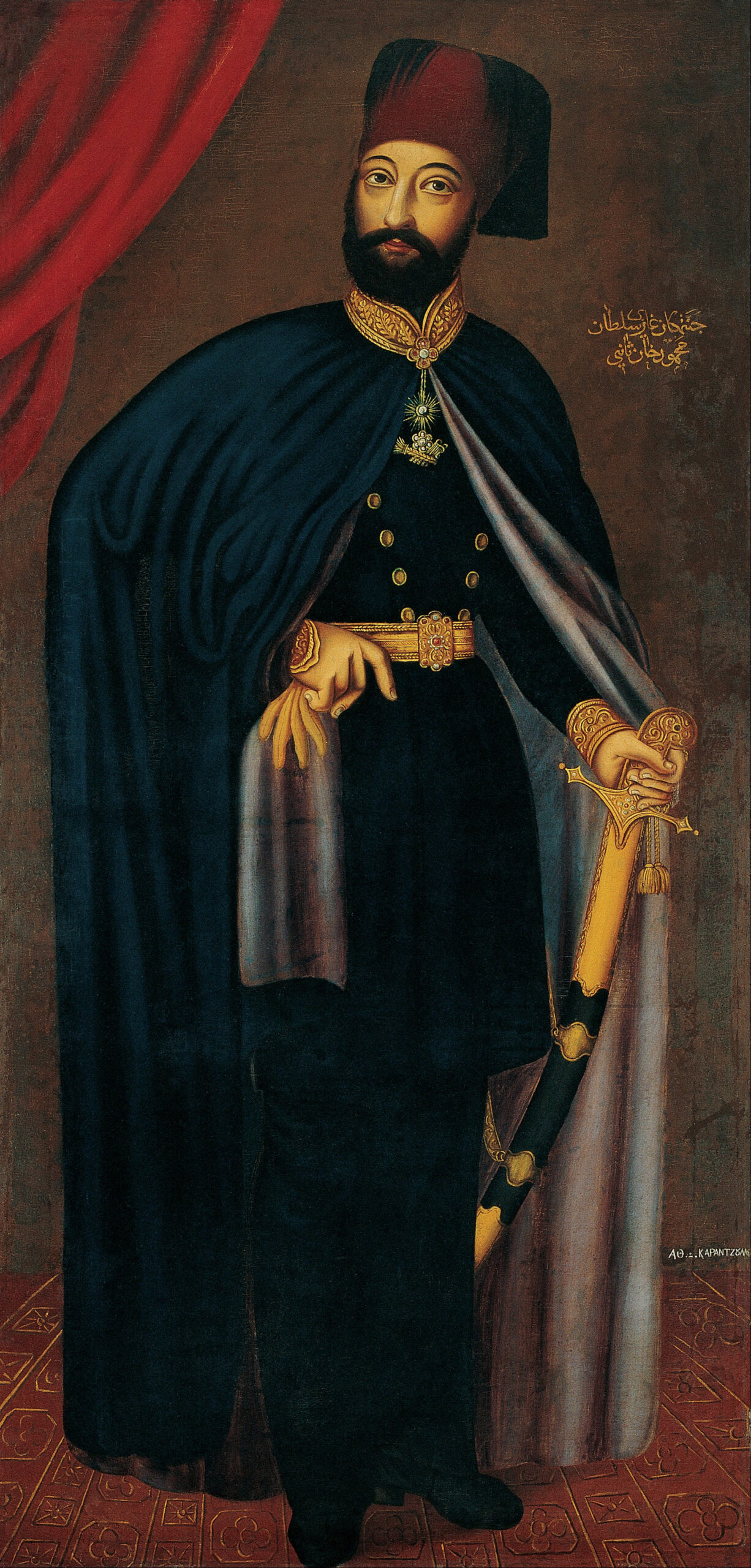
Turco‑Egyptian Intervention
In March 1824, Sultan Mahmud II requested the assistance of the ambitious Mehmet Ali Pasha of Egypt for the suppression of the Revolution. In return, the Sultan promised to grant him Crete and, to his son Ibrahim Pasha, the Peloponnese. Thanks to the reforms he had implemented, Mehmet Ali commanded a powerful and modernly organized army and navy. The large-scale military campaign he prepared altered the course of the Revolution, as in 1825 Ibrahim Pasha’s advance through the Peloponnese placed the Greeks in a difficult position and resulted in widespread destruction.
May 1824
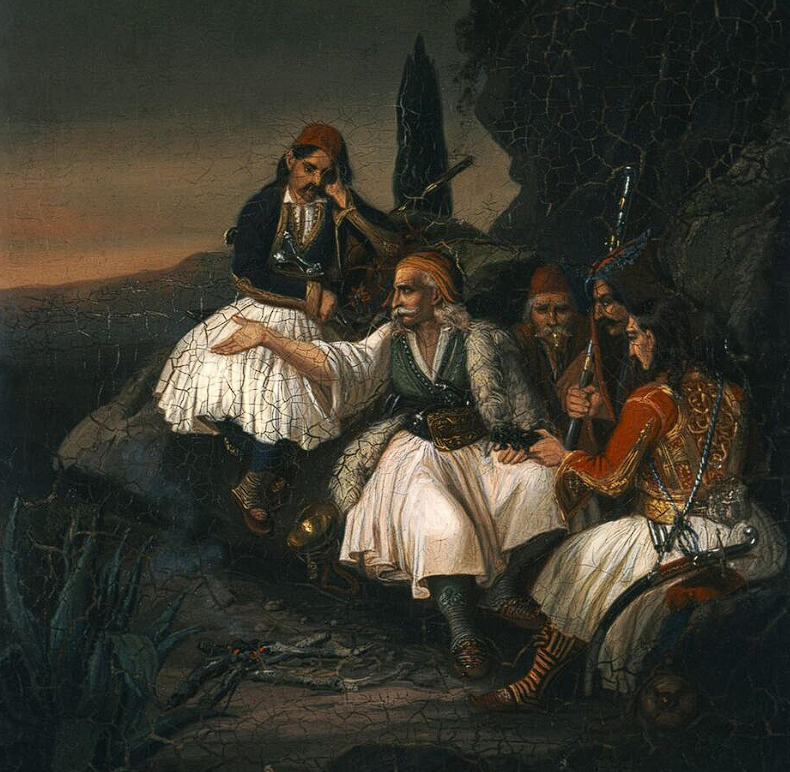
First phase of the Civil War – The siege of Tripolitsa
In the spring of 1824, significant events unfolded during the first phase of the civil war within the Greek Revolution. Tensions between the two opposing sides escalated sharply. In March, the Kountouriotis Government initiated a siege of Tripolitsa, where the Peloponnesian captains were located, using government forces composed mainly of Roumeliotes and Souliotes. In May, a temporary agreement was reached: the government forces entered Tripolitsa peacefully, and the first phase of the civil conflict was considered concluded. The agreement stipulated the neutralization of the city and the establishment of a truce. The Government, however, ignored the terms of the agreement. They installed a garrison of men from Central Greece and treated the inhabitants harshly, viewing them as “anti-government.” Although widespread bloodshed did not occur, the political rupture was profound and foreshadowed the far more serious clashes that would follow.
May 1824
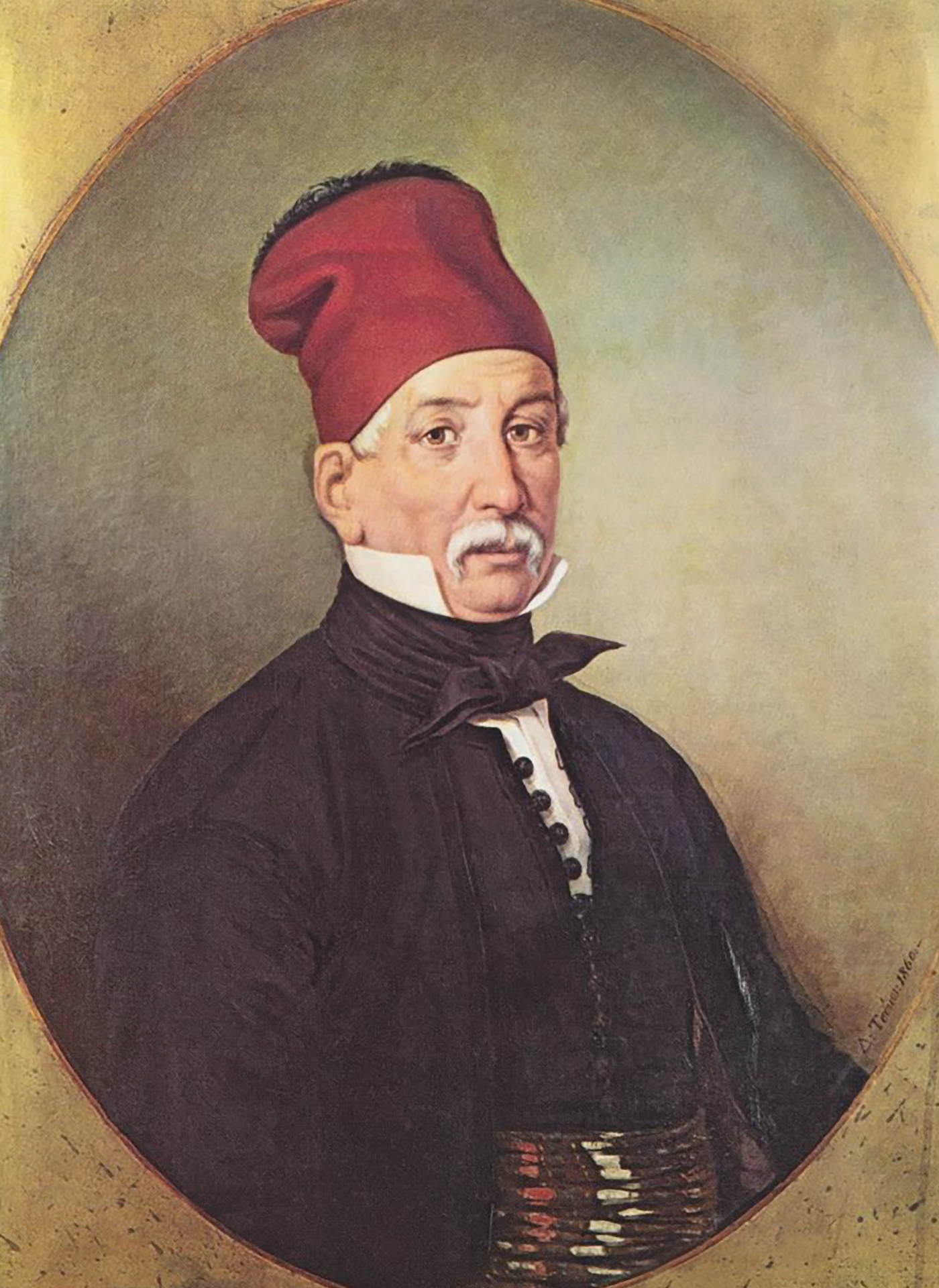
Termination of hostilities between the “Government” and “Anti‑Government” factions
The first phase of the civil conflicts (Autumn 1823 – Spring 1824) concluded with the victory of the “Government” faction, represented by Georgios Kountouriotis, Andreas Zaimis, Andreas Londos, and Giannakis Notaras. The government side was supported by island financiers and philhellenes, who provided both financial and diplomatic backing. After clashes in Corinth, Acrocorinth, and Tripolitsa, the opposing forces of Theodoros Kolokotronis were weakened. Kolokotronis was eventually compelled, in May 1824, to recognize the government of Georgios Kountouriotis in an effort to prevent further bloodshed. The first phase of the civil war ended, temporarily, with the consolidation of governmental authority.
August 1824
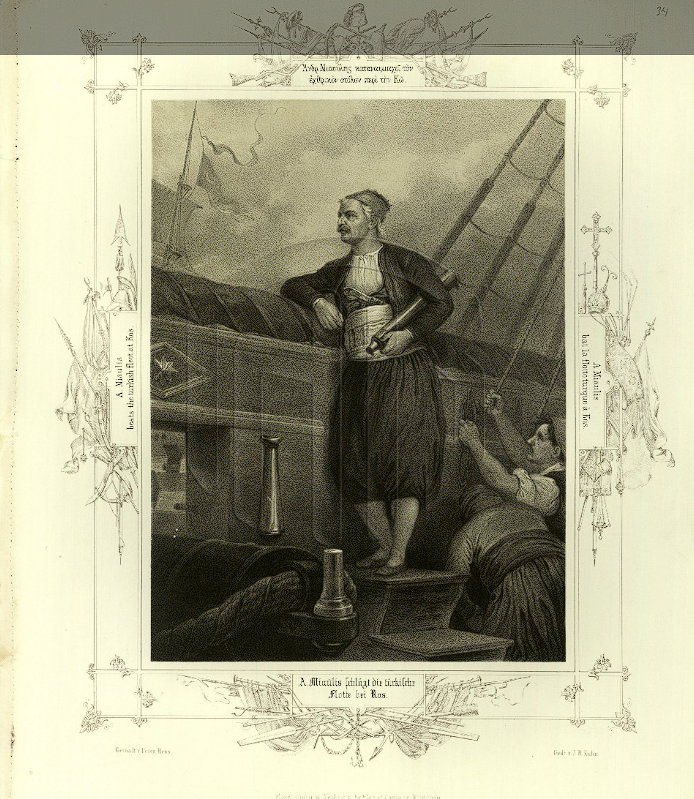
Battle of Gerontas
In the summer of 1824, the Turco‑Egyptian fleet achieved a series of significant blows in the Aegean Sea, culminating in the destruction of Psara and Kasos. On 29 August 1824, near Leros, one of the most important naval engagements of the Struggle took place. The Greek fleet under Andreas Miaoulis confronted the Turco‑Egyptian fleet commanded by Admiral Hosref Pasha, whose objective was to strike the Dodecanese. Despite the numerical superiority of their opponents, the Greeks achieved a major victory, forcing them to retreat and boosting the morale of the revolutionaries.
November 1824
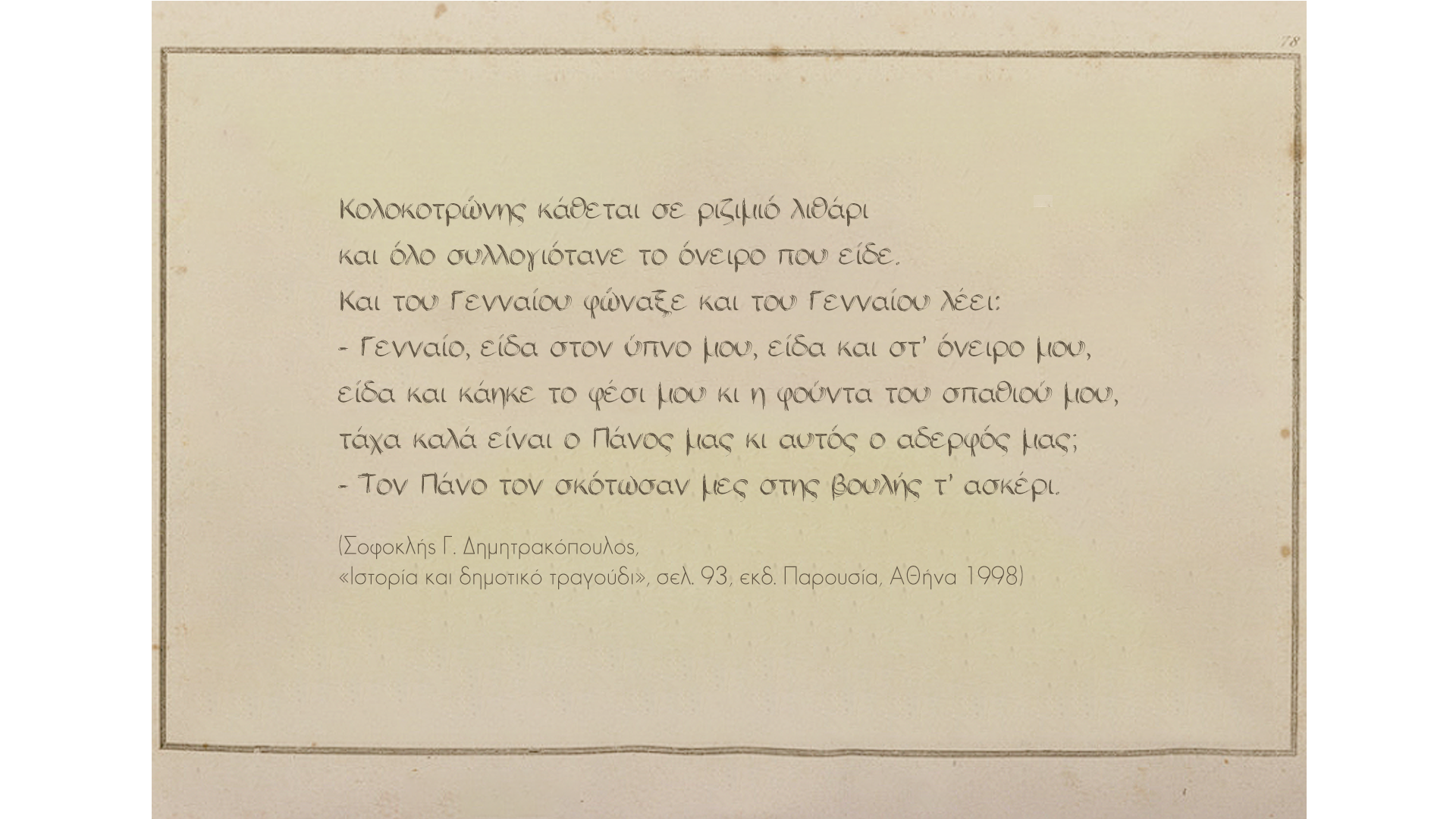
Second phase of the Civil War – The murder of Panos Kolokotronis
In the autumn of 1824, the second phase of the civil war within the Greek Revolution reached its peak, marked by armed clashes between military factions supporting Kolokotronis and political groups seeking to limit his influence. Megalopolis came under pressure during these confrontations, as its strategic position made it a crucial point of control. One of the victims of this internal conflict was Panos Kolokotronis, the eldest son of Theodoros Kolokotronis, who was married to Eleni Boubouli, daughter of the legendary naval commander Bouboulina. Panos Kolokotronis was assassinated on 13 November 1824 in an ambush set by supporters of the Government near the village of Thana, just outside Tripoli. His body was plundered and then taken to the village of Silimna, where his father was located.
November 1824
Death of Panos Kolokotronis
During a clash between Government and Anti‑Government forces, in the context of the civil conflicts that unfolded during the Revolution, Panos Kolokotronis, the eldest son of Theodoros Kolokotronis, was killed near Pallantio in Arcadia.
January 1825
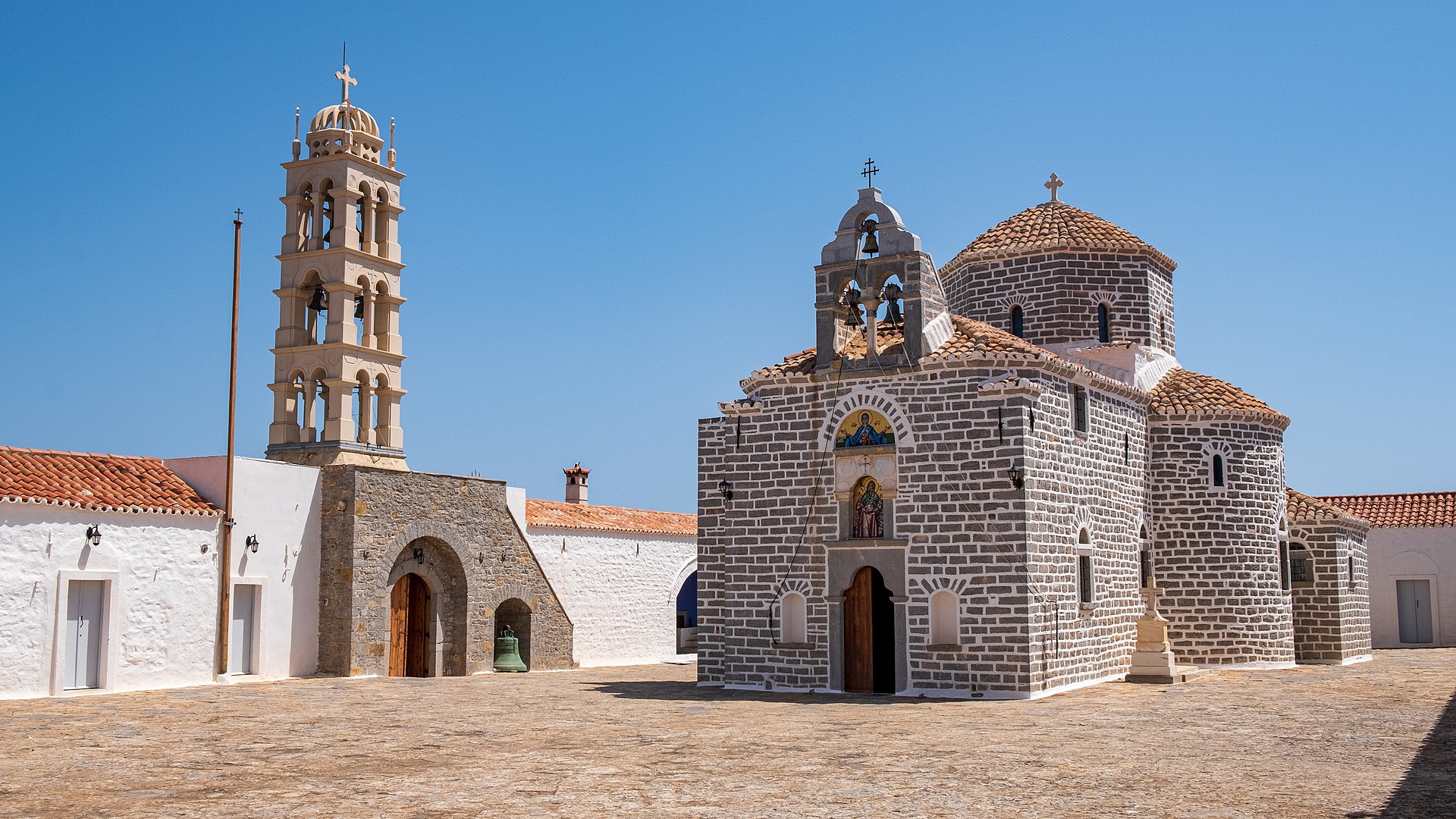
End of the Second Phase of the Greek Civil War (1824–1825)
The second phase of the Greek civil war (July 1824 – January 1825) was particularly bloody and shattered the unity of the revolutionary nation. The clashes broke out mainly in the Peloponnese, between the Government faction of Georgios Kountouriotis—supported by the islanders, the philhellenes, and Britain—and the Anti‑Government Peloponnesians led by Theodoros Kolokotronis. Making use of the British loans and enjoying stronger political backing, the Government forces ultimately prevailed. This phase culminated in the imprisonment of Kolokotronis and his allies in the winter of 1825. The civil war left the Revolution weakened and lacking internal cohesion at the very moment when a major external threat was approaching: the landing of Ibrahim Pasha in the Peloponnese.
February 1825
Arrest of Theodoros Kolokotronis
In the aftermath of the murder of his eldest son, Panos, Theodoros Kolokotronis was devastated and resolved to bring an end to the bloody civil conflict with the Government. Encouraged by Dimitrios Koliopoulos (Plapoutas), who undertook efforts to reconcile the opposing factions, Kolokotronis agreed to travel to Nafplio and “offer to the Administration his submission and his obedience to the laws of the homeland…” Although the Government had declared that amnesty would be granted to the anti‑government faction, Kolokotronis’s intentions were met with suspicion. Ultimately, he was arrested on 6 February 1825 and imprisoned in the Monastery of Panagia on Hydra, together with his companions.
February 1825
Landing of Turco‑Egyptian forces at Methoni
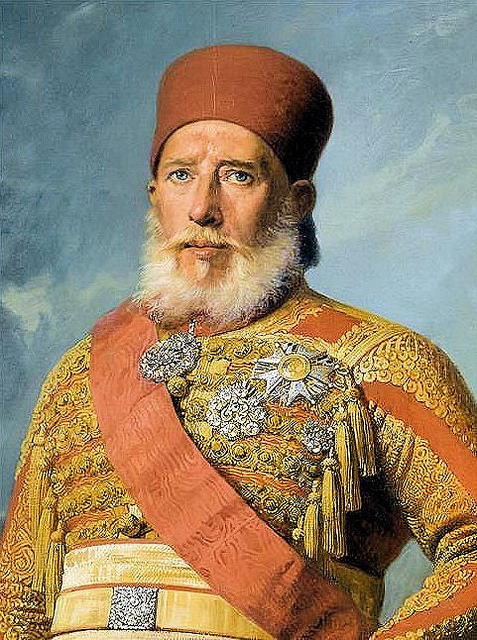
In February 1825, Alexandros Mavrokordatos was elected Secretary‑General of the Executive, thereby strengthening his position within the revolutionary government. At the same time, the Greeks were called upon to confront the landing of Ibrahim Pasha. After failed attempts at Kalamata and Mani—due to the determined resistance of the fighters and adverse weather conditions—the landing was accomplished on 24 February 1825 at Methoni, almost without resistance, as the area was insufficiently fortified. Ibrahim then launched a devastating campaign on multiple fronts, severely undermining the Struggle. Foreign assistance became increasingly necessary, as the Greeks, weakened by the civil war, were unable to face the threat on their own.
Spring 1825
Ibrahim advances through western Peloponnese
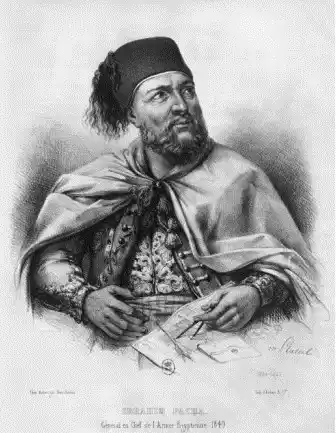
In the spring of 1825, the Turco‑Egyptian forces of Ibrahim Pasha captured key strategic positions in Pylos: Sphacteria, the Old Castle, and the New Castle, thereby strengthening their control over the southwestern Peloponnese. In April, Kioutachis began a new siege of Messolonghi, initiating the second and harsher siege of the city. In May, the government was compelled to release prominent military leaders who had been imprisoned on Hydra—including Theodoros Kolokotronis, Kanellos and Nikolaos Deligiannis, Panagiotis and Giannakis Notaras, and Theodoros Grivas—so that they could contribute to the defense against Ibrahim. On 20 May 1825, Papaflessas was killed heroically in the Battle of Maniaki. During the same period, Greek naval forces achieved a significant success at Cape Caphereus, destroying three enemy ships, among them a Turkish two‑decker armed with 62 guns.
May 20th 1825
Battle of Maniaki
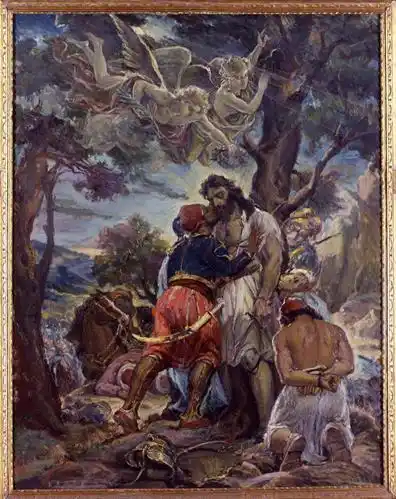
In the Battle of Maniaki, a heroic clash of the Greek Revolution fought at Maniaki in Messenia, the small Greek detachment under the leadership of Papaflessas was called to confront, with courage and self‑sacrifice, the vastly superior forces of Ibrahim Pasha, numbering thousands of cavalry and infantry. Many Arcadians took part in the battle, including thirty fighters from Akovos under the command of Ioannis Metaxas and Panagiotis Kefalas. The Greeks inflicted significant losses on the Turco‑Egyptian army but ultimately suffered complete defeat. Ibrahim Pasha recognized the greatness of spirit shown by the Greek fighters in the person of Papaflessas.
5-7 June 1825
Battle of Drampala
In the Battle of Drampala (or Trampala), fought between 5 and 7 June 1825, a decisive moment of the Greek Revolution unfolded. The Greek fighters were called to confront the army of Ibrahim Pasha of Egypt on the height of Trapezorachi, north of the village of Akovos. The Egyptian forces advanced aggressively into the heart of the Peloponnese and, by the night of 4 June, had already encamped at the village of Poliani. On the following morning, Ibrahim’s army launched an attack, dislodging the Greeks from their defensive positions. The detachment of Georgakis Yatrakos was forced to flee, and Yatrakos himself was wounded. Likewise, the group under Plapoutas, consisting of several hundred men from Kyparissia, resisted but was eventually compelled to retreat. As Ibrahim’s forces advanced, they burned the villages along their route and reached Leontari. Losses were heavy, the Greek defensive line collapsed, and widespread panic ensued. On 11 June, Ibrahim captured Tripolitsa without resistance and continued his march toward Nafplio.
Summer 1825
Capture of Tripolitsa by Ibrahim
On 5 June 1825, Odysseas Androutsos, who was being held in custody, was assassinated on the orders of Giannis Gouras at the Acropolis of Athens. His murder is regarded as the final bloody episode of the civil strife. A few days later, on 10 June, Ibrahim Pasha captured Tripolitsa, strengthening his control over the Peloponnese. However, on 13 June, the Greeks counterattacked: Ioannis Makrygiannis and Demetrios Ypsilantis achieved an important victory over Ibrahim’s forces at the Mills of Argolis. Concerned by the escalating situation, the Greek government issued an official request for British protection, which was rejected so as not to disturb the balance of power in Europe. In August 1825, the Revolution flared up again in Crete, demonstrating the resilience of the struggle.
June 7th 1825
Burning of the Monastery of Saint Demetrios
The army of Ibrahim Pasha of Egypt burned the Monastery of Saint Demetrios, along with several houses in the village of Tourkolekas in Arcadia.
August 1825
Battle of Isar
In the summer of 1825, the Battle of Isari became an episode of heroic resistance by the Greeks against the forces of Ibrahim. Led by the local captain Athanasios Sioris, approximately 150 men defended the village against superior Egyptian and Albanian troops. Although reinforcements arrived from Karyes, Isari was completely destroyed. Despite their defeat, the Greek fighters inflicted significant losses on the enemy and were remembered by their contemporaries for the bravery they displayed.
Winter 1825
Critical political and military developments
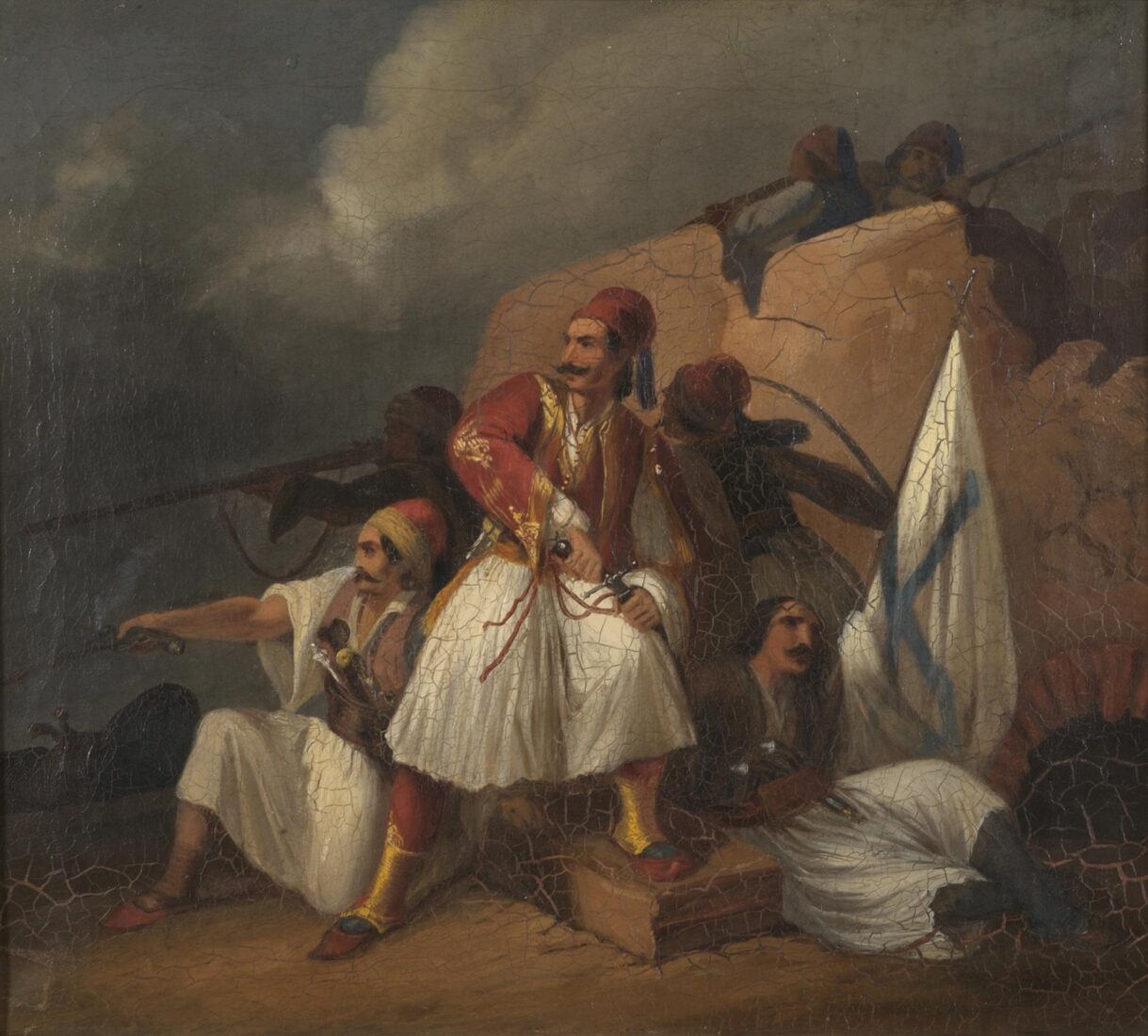
During the second half of 1825, despite Ibrahim’s fierce advance and the constant pressure exerted by the forces of the Ottoman Empire, the Greeks managed to achieve significant military successes — Trikorfa (13 August), Karvasaras (28 September), Alamana (12 October). On 18 November, Georgios Karaiskakis secured an important victory at Distomo. However, the burning of Gastouni by Ibrahim in November dealt a serious blow to the struggle. On the international stage, the sudden death of Tsar Alexander I on 1 December led to the accession of his more war‑minded brother, Nicholas I. On 18 December, Ibrahim arrived at Messolonghi to reinforce Kioutachis’ forces, and the city now found itself encircled by more than 25,000 Turco‑Egyptian troops, who intensified the siege and made resistance exceedingly difficult.
1826
The Castle of Karytaina
In 1826, Theodoros Kolokotronis settled in the Castle of Karytaina, using it both as a base of operations against Ibrahim and as a refuge for the women and children of the surrounding region.
April 1826
Protocol of St. Petersburg
In April 1826, the Protocol of St. Petersburg was signed by Russia and Great Britain, becoming the first international proposal aimed at resolving the Greek Question. It provided for the autonomy of Greece under the suzerainty of the Sultan, with a local Greek government. Although it was not implemented immediately, it laid the groundwork for the Treaty of London (1827) and the Battle of Navarino, which ultimately led to Greek independence. The Protocol marked a turning point in European diplomacy, signalling a shift in favour of the Greek cause.
April 1826
The Exodus of Messolonghi
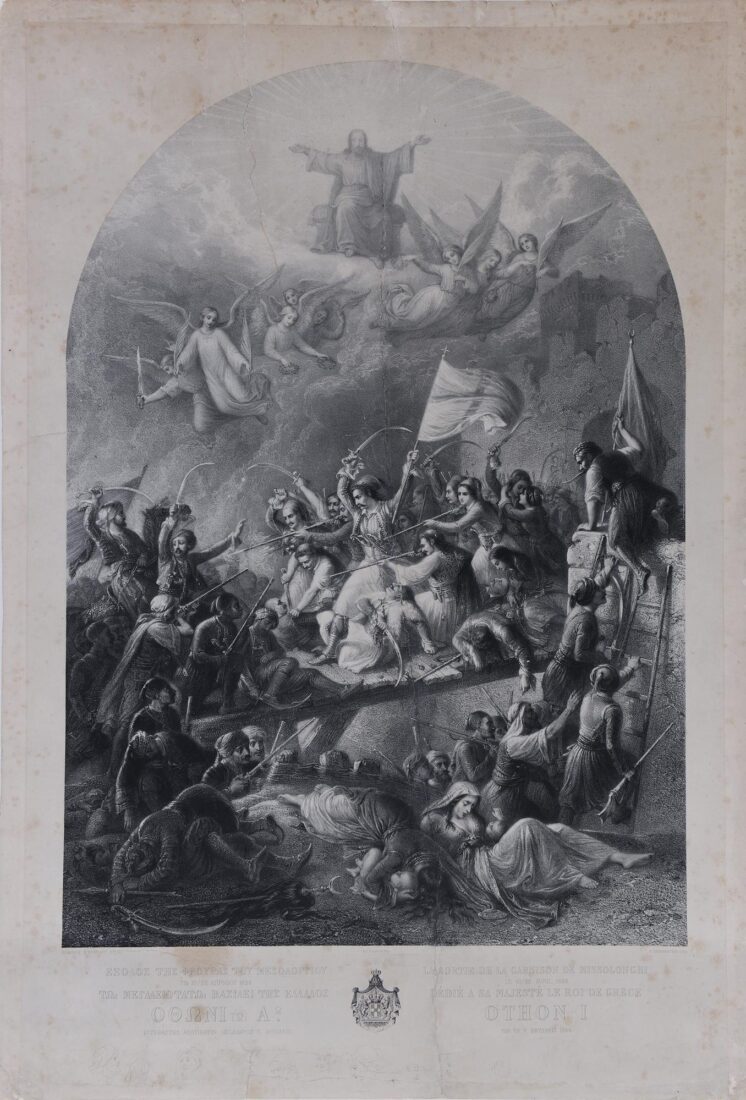
The Exodus of Messolonghi took place on the night of 10 April 1826 (the dawn of Palm Sunday), after a year‑long siege by the forces of Kioutachis and Ibrahim Pasha. Exhausted by famine, hardship, and relentless attacks, the besieged inhabitants decided to attempt a heroic breakout in order to save themselves. Fighters, women, and children were divided into three columns, intending to break through the Turco‑Egyptian lines. However, the plan was betrayed, and the exodus turned into a massacre. Thousands were killed or captured, while only a few managed to escape. The heroic sacrifice of the people of Messolonghi stirred profound emotion across Europe, strengthening the philhellenic movement and accelerating international diplomatic action in favour of Greek independence. From that moment on, Messolonghi became a universal symbol of freedom and self‑sacrifice.
May 26th 1826
Battle at Kotronia of Lagopatis
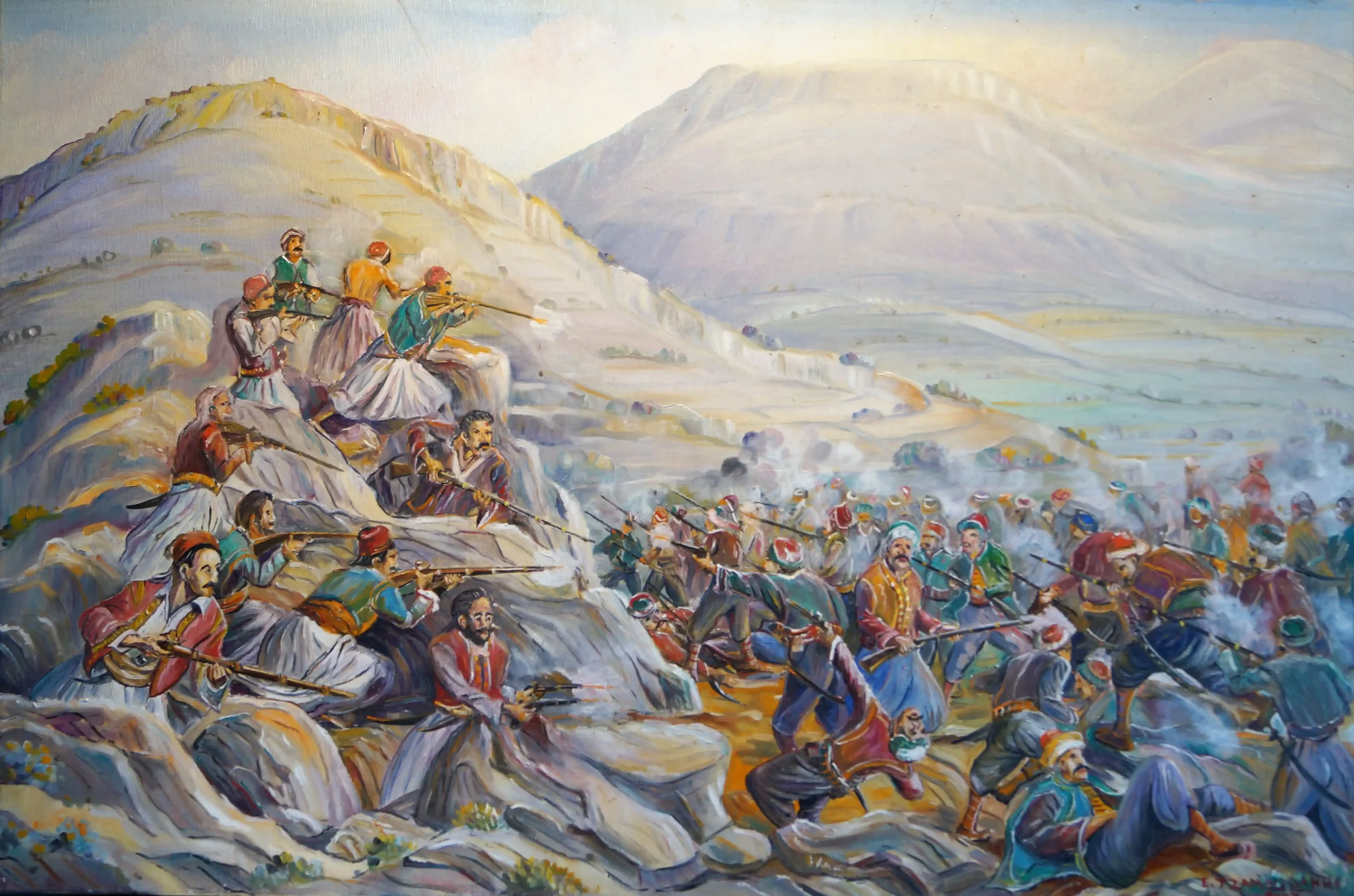
In May 1826, the Battle at Kotronia of Lagopatis took place near the village of Akovos, when a small group of armed men lay in wait for detachments of Ibrahim Pasha moving through the region of Sambaziko toward Messenia. The passage at the site known as Lezona was guarded by a fighter from the village of Arfara in Messenia, known by the nickname Lagopatis. He detected the detachment of forty Turco‑Egyptian soldiers and alerted the men of Akovos to prepare an ambush. The Greeks surprised the enemy, attacked with force, pursued them, and ultimately defeated them in the area of Tsiouka. This small but victorious ambush is a characteristic example of the guerrilla warfare employed by Kolokotronis against Ibrahim’s army in the Peloponnese and is considered an important engagement for the region of Falaisia.
Summer 1826
The resistance of Mani and the capture of Athens
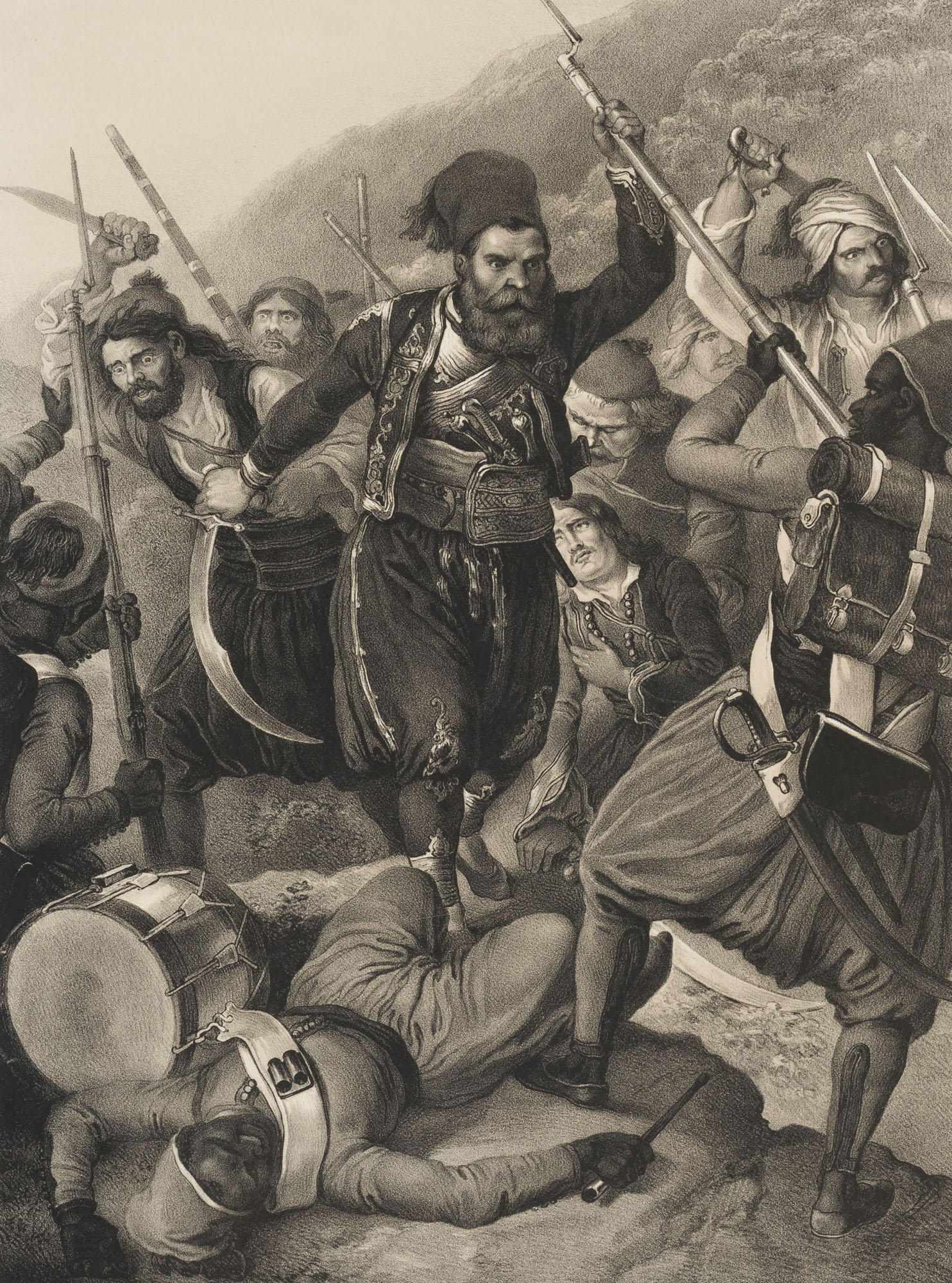
n the summer of 1826, Ibrahim’s forces launched repeated and fierce attacks against the fortified position of Verga in Mani, all of which were repelled with heavy losses for the invaders. In June, in the region of Diros, the women of Mani distinguished themselves, armed with harvesting sickles, contributing decisively to the Greek victory. In August, Ibrahim’s humiliating defeat at Polyaravos confirmed his inability to conquer Mani, keeping the spirit of resistance alive. During the same period, Athens fell into the hands of Kioutachis, while fierce battles unfolded at Haidari under the leadership of Karaiskakis and Fabvier. At the same time, naval clashes occurred in the waters around Mytilene, underscoring the intensity of the fighting on land and sea during this critical phase of the struggle.
November 1826
In Aegina, the seat of the Zaimis Government
In November 1826, Aegina temporarily served as the seat of the revolutionary government under the leadership of Andreas Zaimis. The relocation of the government to Aegina was primarily due to the need for a safer base, as mainland Greece was under constant siege and attack by Turco‑Egyptian forces. As an island close to Attica, with relatively strong fortifications, Aegina offered better protection and more reliable communication with philhellenes and naval powers. From there, the government sought to continue coordinating the Revolution, gathering resources, and securing international diplomatic support. This period proved crucial for maintaining Greek administrative continuity and organising the struggle.
1827
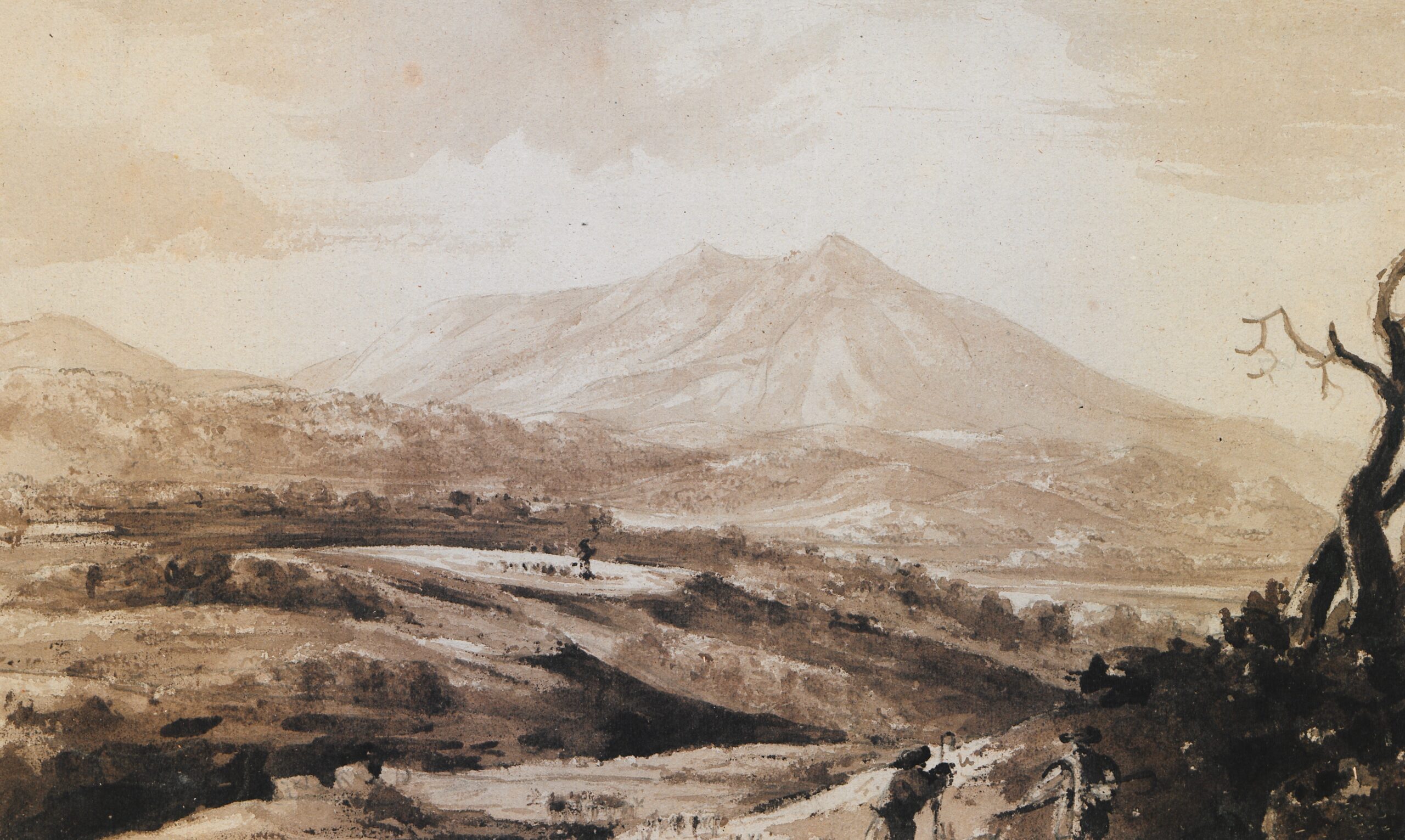
Proclamation of Mobilization
In June, Theodoros Kolokotronis ordered a mobilization in the regions of Arcadia, Leontari, Mystras, and Messenia, as well as in the provinces of Karytaina and Fanari, with the aim of obstructing communication between Ibrahim Pasha of Egypt, Tripolitsa, and the Messenian fortresses.
Spring 1827
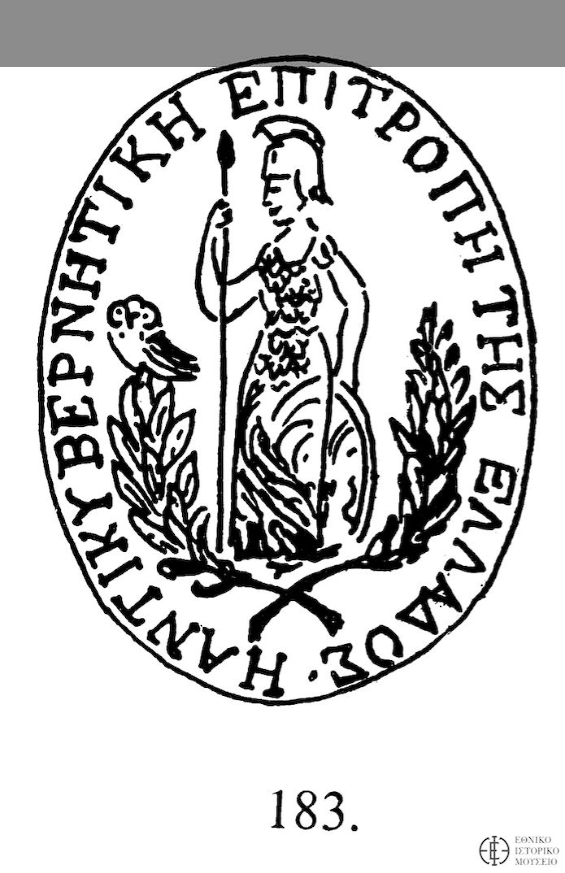
Third National Assembly of Troezen – Election of Ioannis Kapodistrias as the first Governor of Greece
During the Third National Assembly at Troezen, on the proposal of Theodoros Kolokotronis, command of the land forces was entrusted to Church and that of the naval forces to Cochrane. The most significant decision was the unanimous election of Ioannis Kapodistrias as the first Governor of Greece, with a seven‑year term. The Governor would be bound by the “Political Constitution of Greece.” Until his arrival, the “Interim Governing Committee,” composed of Georgios Mavromichalis, Giannoulis Nakos, and Marquis Milaïtis, was to assume responsibility for governance. At the same time, fighting against the Ottomans continued intensely in Faliro and Piraeus, resulting in heavy losses. In the Battle of Faliro, the fighter Georgios Karaiskakis was killed, while at Analatos (Neos Kosmos) Georgios Tzavelas and Lambros Veikos fell. Finally, on 24 May 1827, the Acropolis of Athens was surrendered to the Ottomans.
Summer 1827
The “Treaty for the Pacification of Greece”
On 6 July 1827, the “Treaty for the Pacification of Greece” was signed in London by Britain, France, and Russia. In September of the same year, Admirals Codrington of Britain and de Rigny of France formally notified Ibrahim that all movement of troops was prohibited, effectively imposing a halt to military operations. At the same time, the Greek Government and the Parliament had already settled in Aegina since August, marking the consolidation of the administration of the nascent Greek state and the preparation for the next phase of national independence.
October 1827
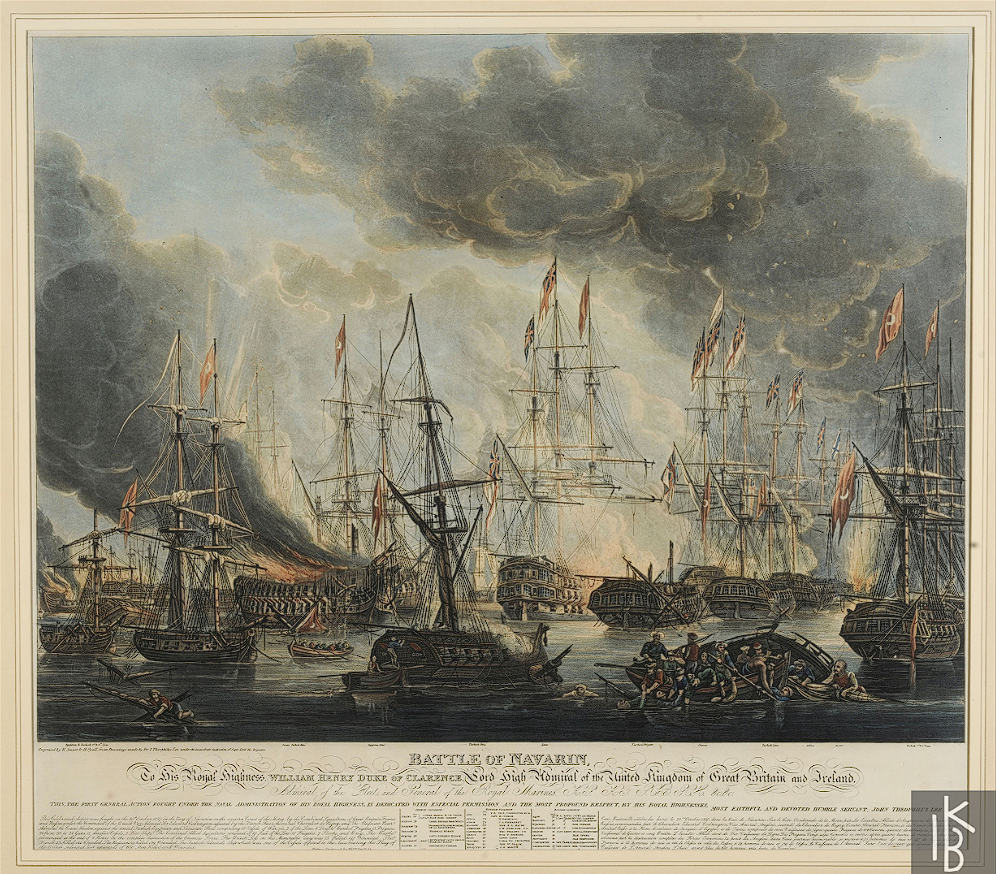
Naval Battle of Navarino
The Naval Battle of Navarino, which took place on 20 October 1827, was a decisive moment in the Greek Revolution. In this engagement, the combined fleet of the three Great Powers — Britain, France, and Russia — confronted and destroyed the Ottoman and Egyptian fleet anchored in the Bay of Navarino, in the southwestern Peloponnese. The victory of the allies effectively crippled Ottoman naval power and strengthened the Greek struggle for independence. The battle is recognised as one of the most significant naval engagements of the 19th century and marked a turning point, as it helped shape international support for Greece and paved the way for the eventual recognition of its independence.
1828
Destruction of Tripolitsa and Withdrawal of Ibrahim
In February, Ibrahim Pasha arrived in Tripoli at the head of a force of 12,000 men and ordered the demolition of the city walls and the complete destruction of the town. In August 1828, following the directive of the Great Powers, a French expeditionary corps of 16,000 men landed on the Messenian coast with the objective of compelling the Egyptian army to evacuate the Peloponnese. In October, the last Turco‑Egyptian troops departed from the region.
January 1828
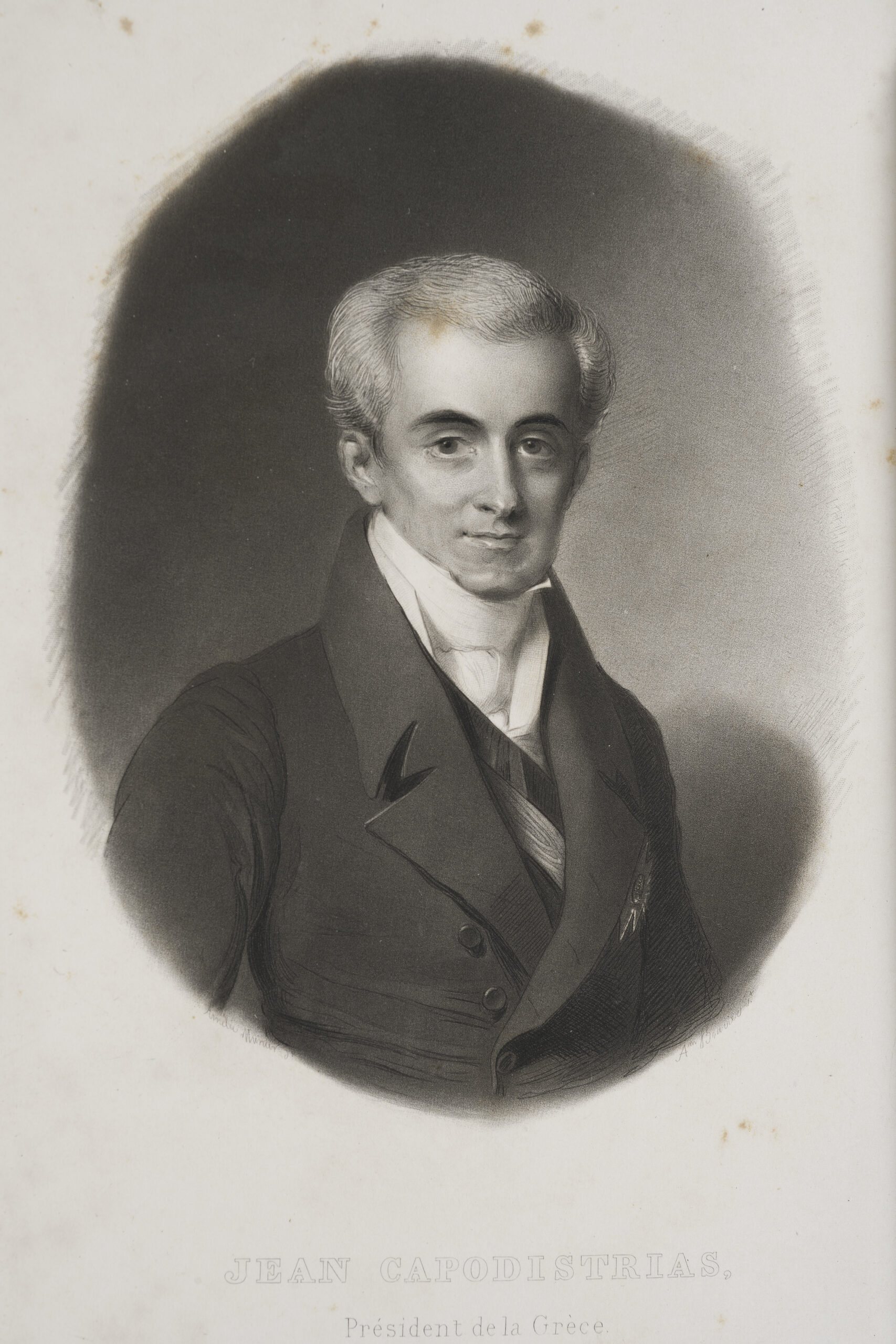
Arrival of Ioannis Kapodistrias in Greece
Ioannis Kapodistrias, an experienced diplomat and former Foreign Minister of Russia, arrived in Greece in 1828 as the first Governor of the newly established Greek state, following the decision of the Third National Assembly at Troezen. His arrival in Aegina was greeted with enthusiasm, as the Greeks hoped for stability and organisation after years of revolutionary struggle and internal conflict. During his governance (1828–1831), Kapodistrias implemented a series of administrative and social reforms, laying the foundations of the state apparatus. He established schools, organised the first army and police corps, introduced the first national currency (the phoenix), and sought to impose the rule of law. However, he came into conflict with powerful local leaders, particularly in Mani and Roumeli. His administration, though pivotal for the formation of the Greek state, was marked by political tensions. These culminated in his assassination on 27 September 1831 in Nafplio by Konstantinos and Georgios Mavromichalis, an event that plunged the country into a new period of instability.