Stavrianna Savvaina
Stavrianna Savvaina embodies the figure of the woman‑fighter who, with steadfast resolve and remarkable courage, offered essential support during the War for Independence. According to Pouqueville, the women of Arcadia would hang their wedding crowns in the Church and declare themselves “widows” when their husbands faltered before the Ottomans and abandoned the battlefield. [F.C.H.L. Pouqueville, Histoire de la régénération de la Grèce, vol. 2, Paris, 1824, p. 317.]
Stavrianna Savvaina was born in 1772 in the village of Parori, near Sparta, and was the wife of Georgios (Giorgakis) Savvas. After her husband was hanged in Mystras in the spring of 1821, she resolved to take up arms alongside the Maniates and joined the military corps of Kyriakoulis Mavromichalis. She took part in fights in Messinia, in the siege of Tripolitsa, and in major battles such as Valtetsi and Trikorfa.
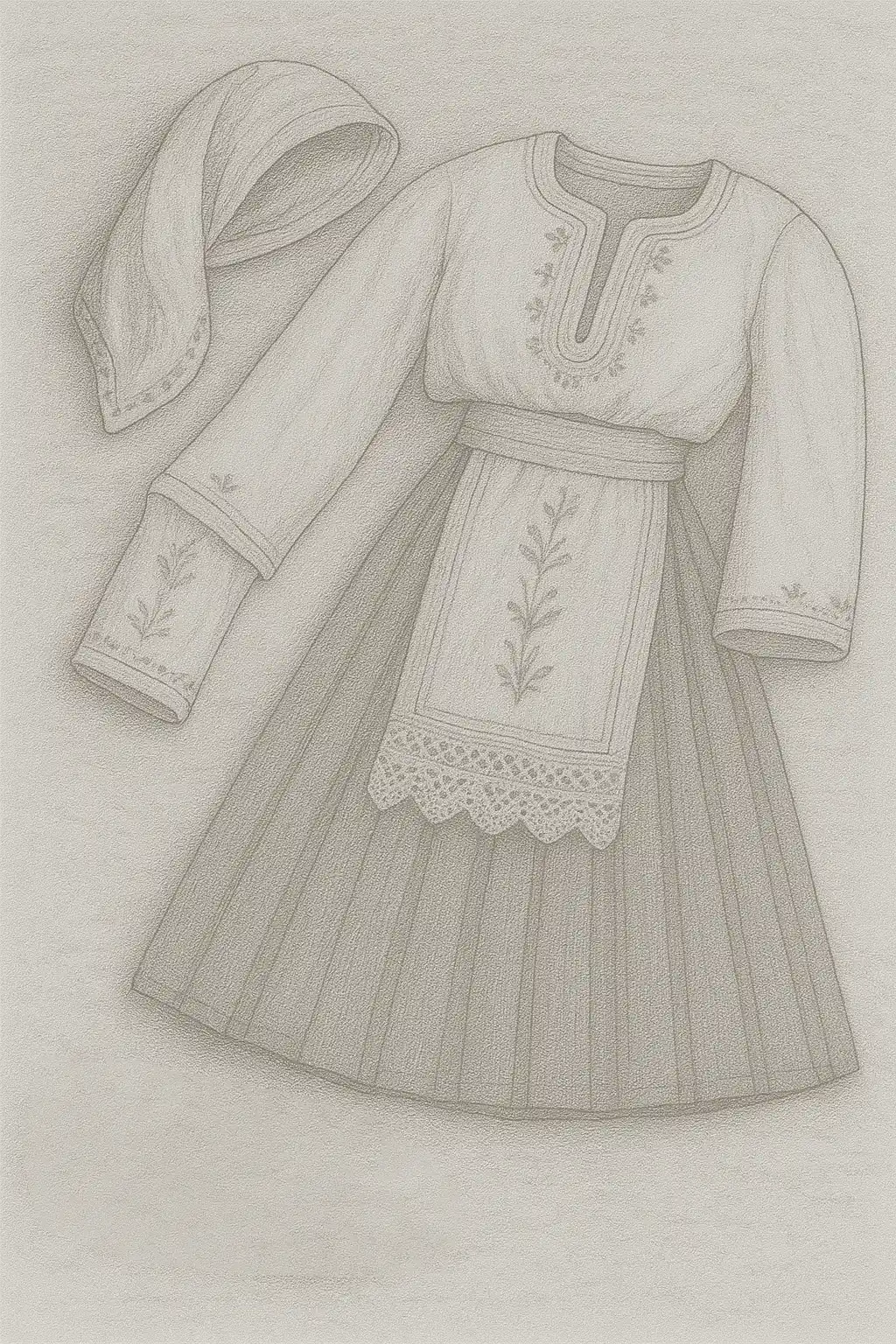
“Her name, almost unknown to the younger generation, still echoes with gratitude in that sacred place of the first great Greek battle. She was forty years old, dark‑haired, comely, with a masculine bearing, a thunderous voice, and the stature of a soldier. (…) Wearing her traditional Laconian women’s dress, Stavrianna enlisted as a volunteer soldier under the command of Kyriakos Mavromichalis and was enclosed with him in Valtetsi, where the Greeks were tightly besieged by the Turks. (…) Stavrianna alone, among so many men, had the courage—disregarding the bullets falling in torrents from every direction—to carry from bastion to bastion the powder charges needed to sustain the battle. (…) The men around Kolokotronis, Mavromichalis, and Plapoutas, unable to believe that a woman or any human being could possess such bravery and survive the countless bullets that ceaselessly fell around her, imagined in their simple faith that beneath the guise of that village woman was the Virgin Mary herself, descended from Heaven to protect the Greek arms against the infidels.”
Excerpt from the article “Unknown Heroines of ’21: Stavrianna, Modena, and the Women of Messolonghi,” published in the weekly magazine Efimeris ton Kyrion, no. 158 (25 March 1890), p. 2.